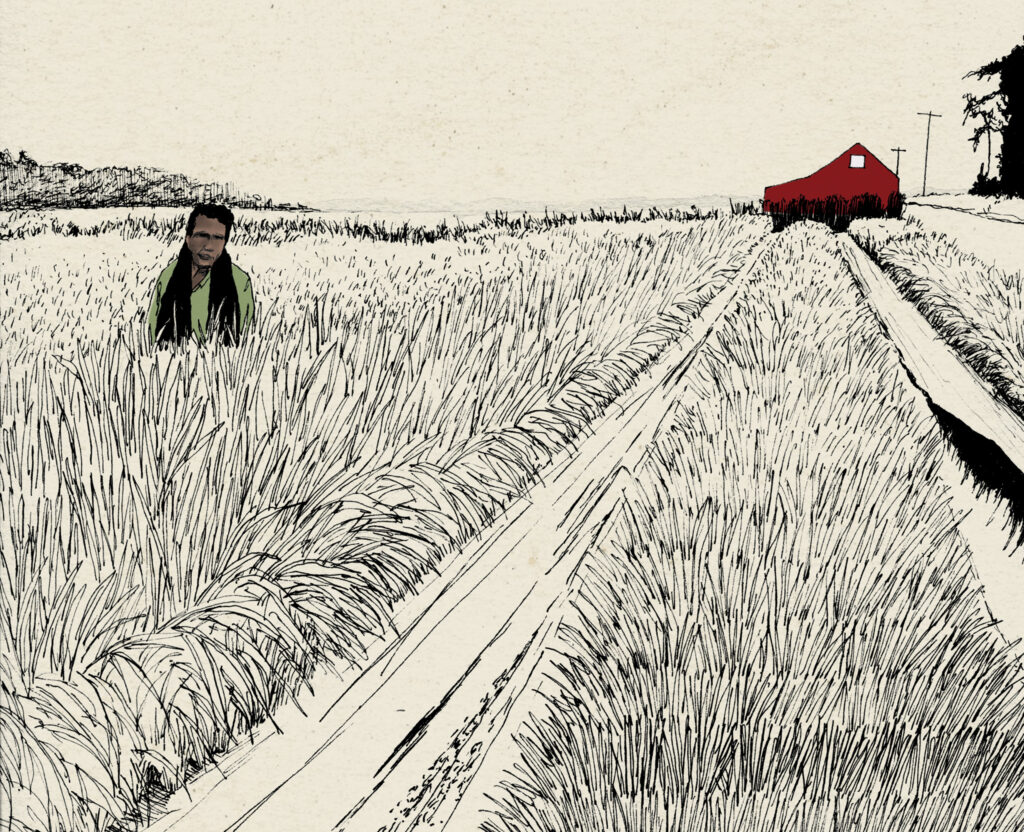
Like all plantations in the South, Inglewood Plantation in Alexandria, Louisiana, was once owned by white enslavers. Before the Civil War, Inglewood’s 1,500 acres were tended by the Black people who were forced to live on them. When slavery was abolished, many of those formerly enslaved people became sharecroppers, leasing that same land from the landowners in exchange for a cut of their crops’ profits. It was a predatory farming system often called “slavery by another name.”
Today, Inglewood is home to a sprawling organic farm, 17 acres of which belong to Jubilee Justice, a nonprofit that supports Black farmers and promotes regenerative and sustainable farm practices, cooperative ownership, and economic security for farmers of color.
Konda Mason, an entrepreneur from Oakland, California, founded the organization in 2017. Early on, Mason focused on facilitating conversations about what she calls the “four pillars” — land, race, money, and spirit — before moving her focus to agriculture.
“I was thinking a lot about capitalism and what is the alternative to extractive capitalism as we know it in America,” Mason tells The Rooted Journal. She wanted to figure out a way to rewire the connections between capitalist structures, land ownership, money, and spiritualism to create a program that could benefit Black farmers.
This pursuit led her to the System of Rice Intensification (SRI), a type of regenerative farming developed in Madagascar that is less resource-intensive and environmentally damaging than conventional rice farming. Now Mason is working with smallholder Black farmers on a pilot program trialing SRI techniques in the United States.
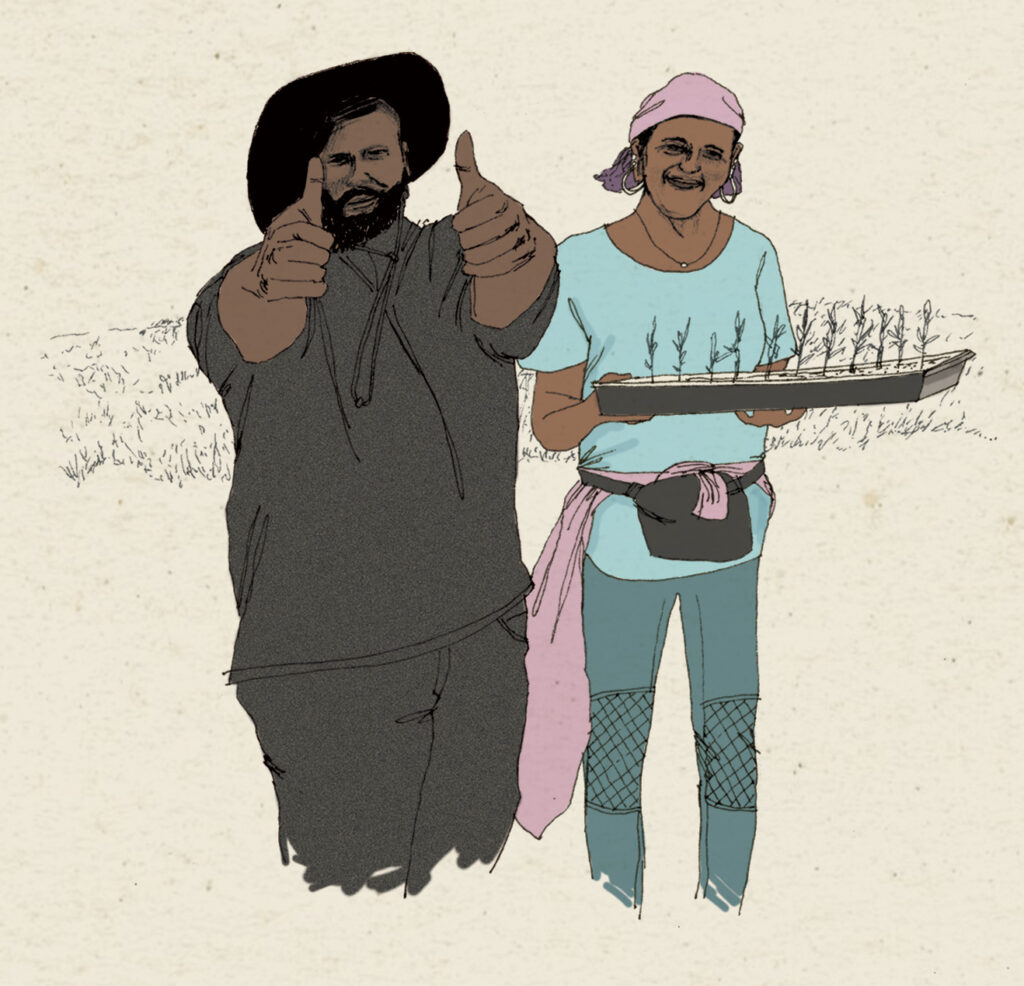
REFORMING LAND OWNERSHIP
Mason’s grandfather was a farmer in Alabama when discriminatory loan practices and Jim Crow laws forced him to give up his land and move West as part of the Great Migration, which saw Black people leave the South in record numbers after World War I. More than 6 million Black Americans left the South between 1910 and 1970, citing racism, segregation, and lack of opportunity. “He lost everything — he lost his land, he lost his store. They lost everything they had, other than what they had on their backs,” says Mason. “That story was always with me and a part of my DNA.”
“After enslavement, there’s supposed to be 40 acres and a mule, but it never happened,” she says, referring to an unfulfilled promise made to freed slaves after the Civil War. “Suddenly, the people that they had enslaved were not being enslaved, but [Southern farmers] basically did everything they could to keep that kind of dynamic going.”
Mason’s grandfather’s story illustrates the widespread degradation of the country’s Black farming community. Prior to 1920, there were nearly 1 million Black farmers in the United States, though many of them were sharecroppers who didn’t own the land they farmed on. Today that number has dwindled to less than 50,000, according to the U.S. Department of Agriculture (USDA); the Black Farmers & Agriculturalists Association says the number is closer to 5,000.
Mason says racism still pervades the agricultural community. “There’s a central belief that Black folks are not supposed to have land,” she says. “The theft of land continues to happen.” In the early 1900s, Black farmers owned more than 15 million acres of land. By the ’90s, that number had diminished to 2 million, representing less than 1% of U.S. farmland ownership.
“It happens through not giving Black farmers loans when white folks get a loan,” Mason says. And even when Black farmers are approved for loans, “they have to jump through way more hoops.” Mason says Black farmers often receive their loan payments late, which can force them to skip growing seasons and lead to overcollateralization, meaning the collateral they provide to receive a loan is worth more than the loan itself. In farming, “everything happens when it needs to happen. When you need to plant, you need to plant,” Mason says. “So if you’re off a season, and you don’t get your little bit of money, you’re behind.“
In 1999, a federal judge ruled that the USDA had systematically denied loans to Black farmers and awarded a group of Black farmers more than $1 billion in damages. In 2010, a second $1.25 billion settlement was awarded to Black farmers and their families. And in the summer of 2024, the Biden-Harris administration established the Inflation Reduction Act’s Discrimination Financial Assistance Program, which provided $2.2 billion in reparative funds to 43,000 farmers and ranchers who faced discrimination in federal loan programs.
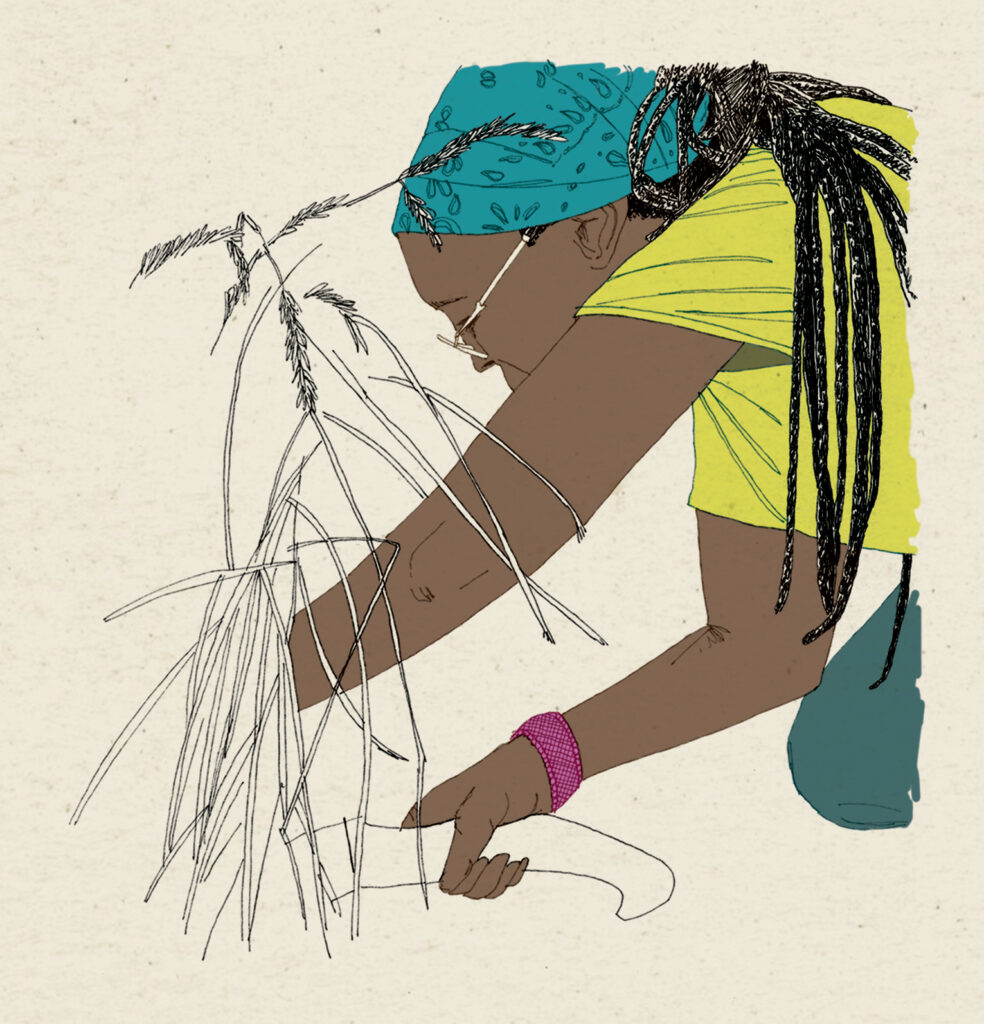
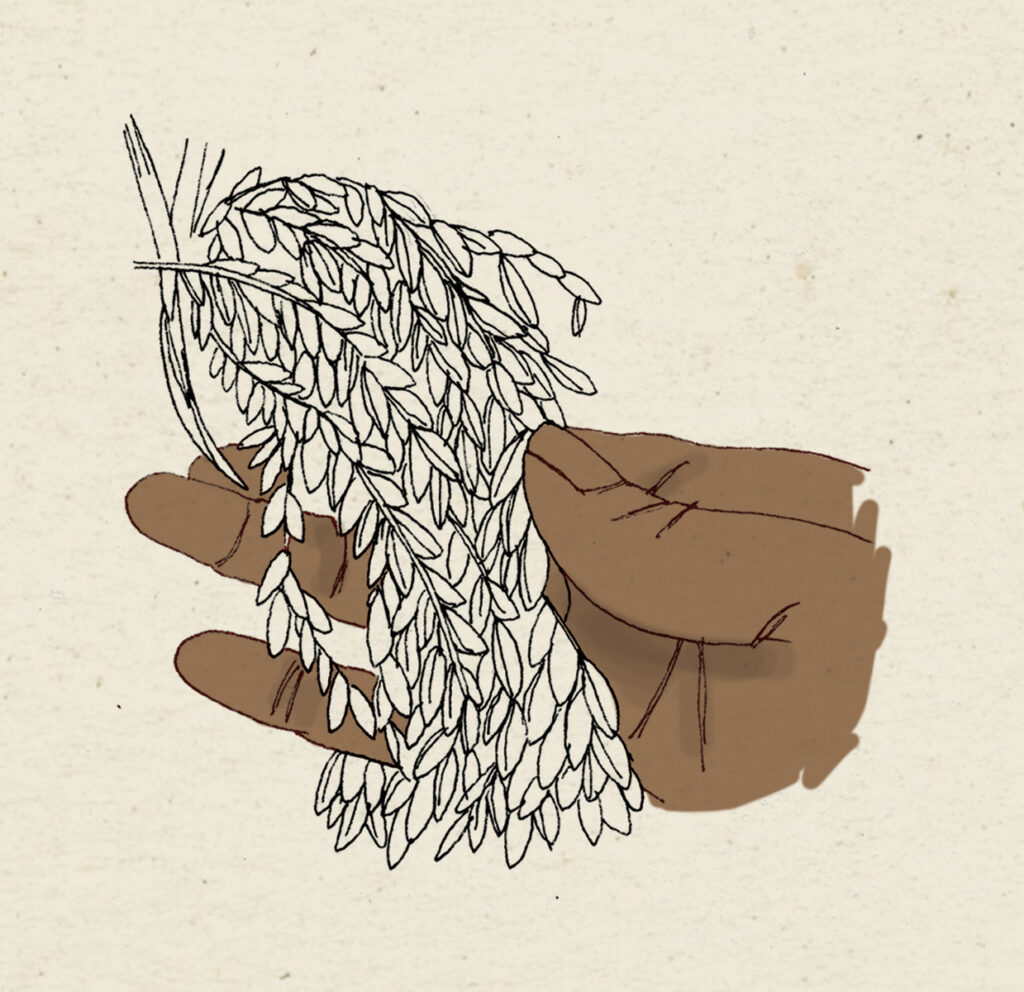
DISCOVERING SOMETHING SPECIAL
Shortly after starting Jubilee Justice, Mason connected with Caryl Levine, co-founder of Lotus Foods, a California-based organic specialty rice company at the forefront of the SRI movement. Lotus Foods had been working with researchers at Cornell University’s SRI International Network and Resources Center to help farmers develop SRI practices in Asia and Africa.
“By changing how rice has grown, we learned that we could have social, environmental, and economic impacts,” Levine says, noting that sustainable farming has helped keep families together because men no longer need to leave rural communities to earn money.
“We thought, ‘Oh my God, it doesn’t get better than that.’ It really goes beyond organic and beyond any mission alignment and impact that we ever thought we could achieve.”
Levine and her partner Ken Lee were looking for U.S. farmers to work with. “I knew it was something special,” Mason says. “She explained to me the system of rice intensification, why it’s good for the planet, and why it’s good for the people.”
Conventionally grown rice involves continuously flooding fields. “The soil can’t breathe, the roots can’t breathe,” says Lee. “[Rice] learned to survive in water. It does not thrive in water.”
Furthermore, conventionally grown rice “is a menace because of the amount of methane that is released from all of the water and the flooded fields,” Mason says. Rice production accounts for around 8% of global methane emissions. SRI production can reduce that amount by nearly half because SRI farming requires much less water and doesn’t use agrichemicals. It’s healthier for plants and soil, and it’s more productive.
“Just by creating more distance in your rows and by not flooding the fields, you could basically have double and triple the yields,” says Levine.
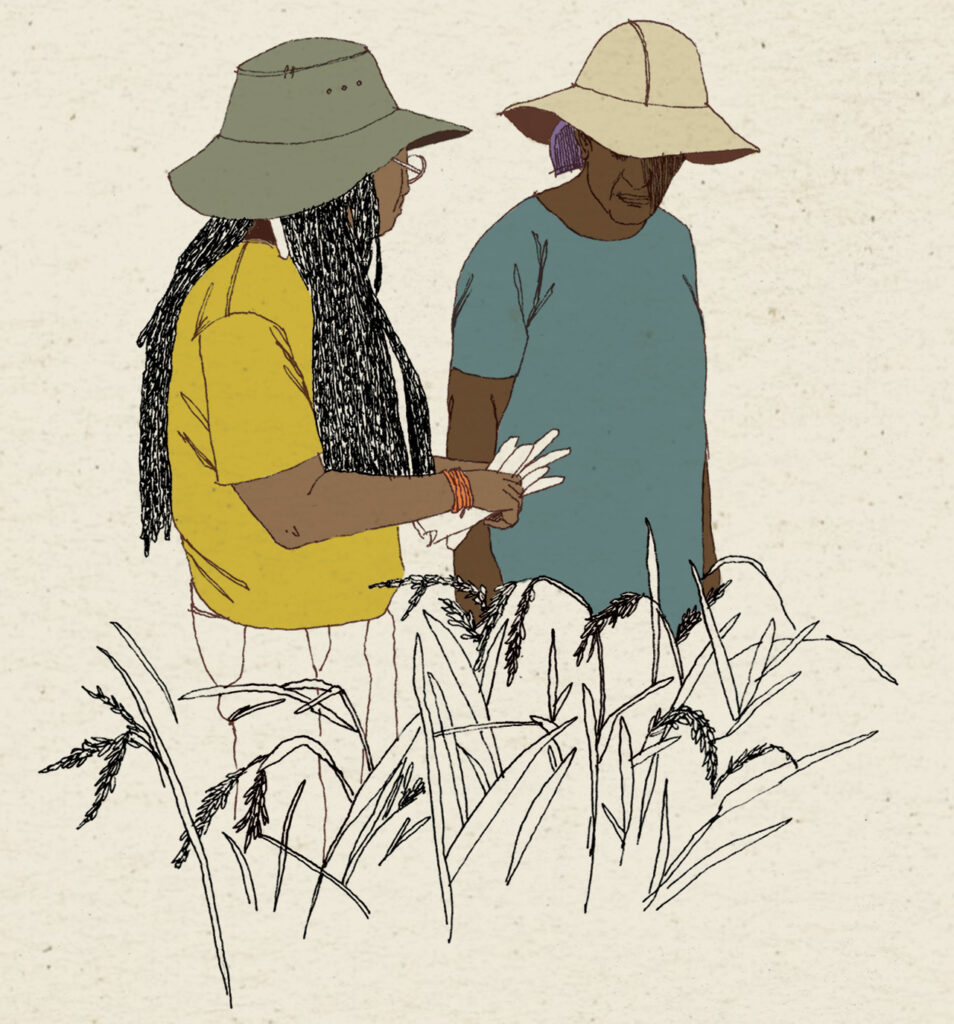
Mason and about a dozen Black farmers at Jubilee Justice are currently testing different varieties of rice. The process is slow. Because the farm is organic, they don’t use herbicides, and they’ve struggled to control weeds. But Mason believes her work demands holding herself and her partners to a high standard.
“When I think about spirit, I think about the sanctity of life. I think about how all life is deeply interconnected,” Mason says. “We’re responsible for each other. And as we start to understand that responsibility — that an ecosystem is larger than myself, larger than my own family, larger than the people that I know and love — and we open up our circle of care, [we understand] that there is a huge responsibility here.”
As Mason works toward Jubilee Justice’s mission — to heal both humans and the land — she thinks about people like Charles and Shirley Sherrod, who started the first community land trust to support Black farmers in the 1960s. She thinks of her grandparents and her parents, too. “My mom instilled in her four children, ‘Do something about what’s wrong,’” she says. “That’s the DNA I come from.”