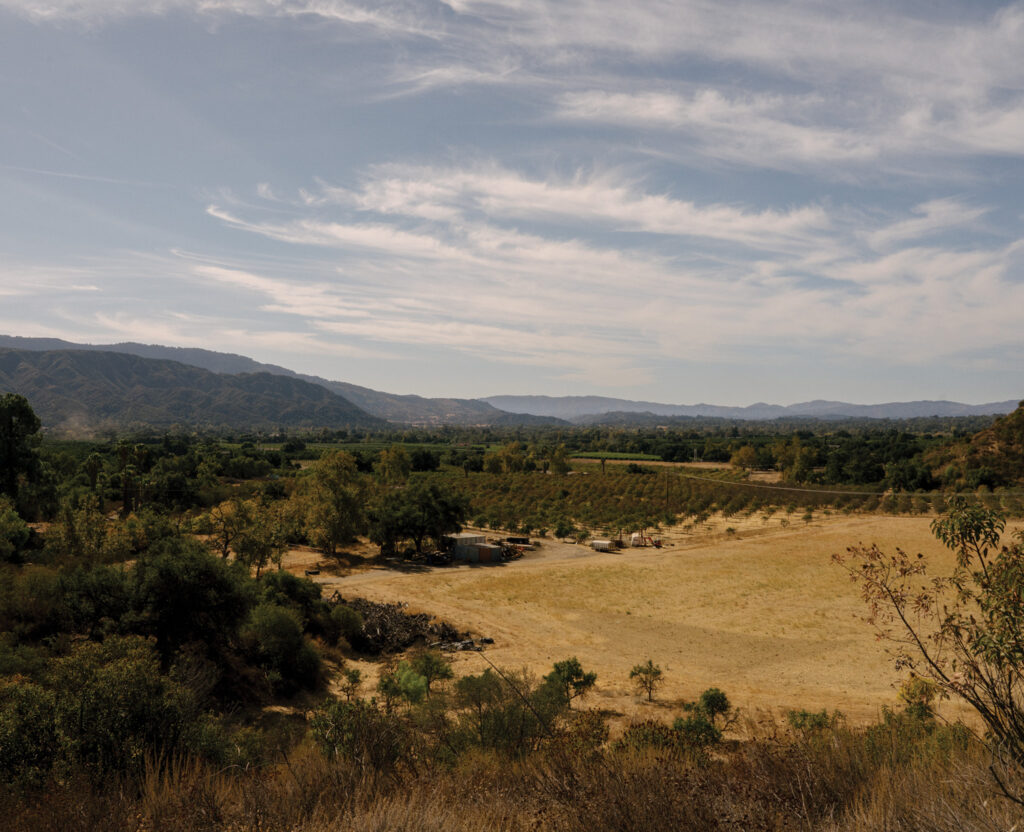
Agrivision is a company that prides itself on forging beneficial relationships with the growers whose land it manages and crops it markets. The company places just as much importance on the people who help bring these products to grocery store shelves across the United States.
Based in Porterville, California, Agrivision comprises two family-founded businesses: AgriCare, a full-service farm management company launched by Tom and Karen Avinelis in California’s San Joaquin Valley in 1990, and Homegrown Organic Farms, a marketing arm founded by Porterville organic citrus growers John and Cindy France in 1998. Today, Agrivision operates about 10,000 acres in California and Oregon and markets all kinds of produce for more than 100 growers in California, Oregon, and Mexico. It’s also owned and operated by its 140 or so full-time employees.
In 2021, the Avinelises and Frances were looking to step away from day-to-day operations. They decided the best way forward was to create an employee stock ownership plan (ESOP) that allowed employees to buy stock in the company, giving them a heightened stake in Agrivision’s success. Brenna Benevidez, chief administration officer of AgriCare, food safety manager for Homegrown Organic Farms, and the Avinelises’ daughter, says this employee-forward ethos underscores the entire business. “It’s important to understand that what makes our family of companies unique is, it’s not just about the bottom line, it’s about the people,” Benevidez says. “It’s about taking care of our employees, giving them opportunities to learn and grow and train in their roles.”
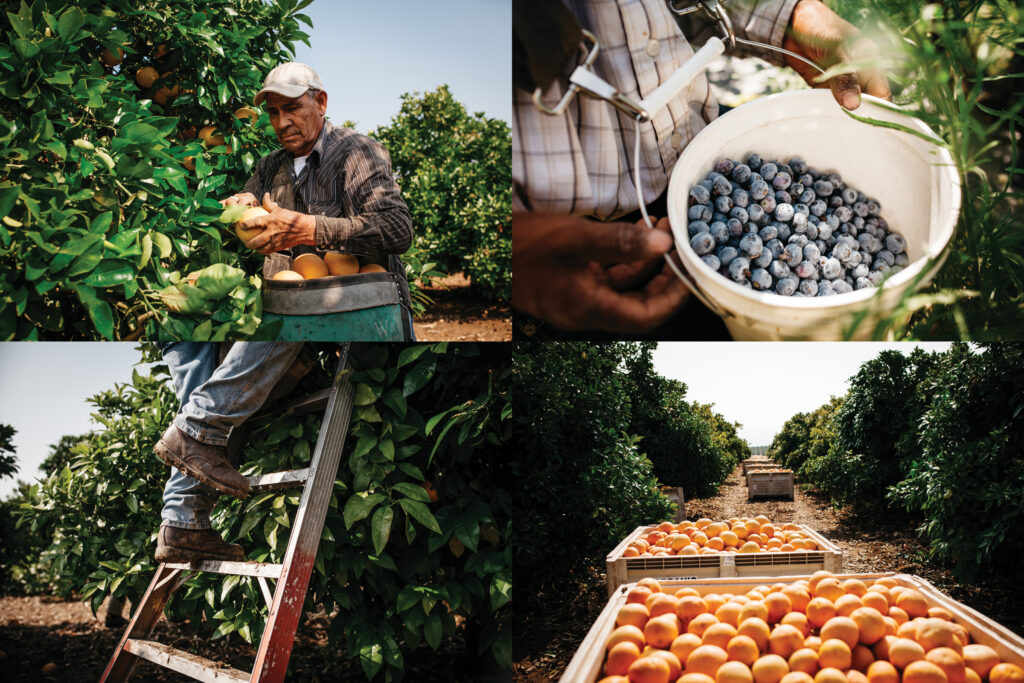
Agrivision is 100% employee owned and operated which means their purpose-driven values are reflected in the quality of their product.
The Guiding Philosophy
AgriCare, like its name implies, was born of a desire to support growers. Tom Avinelis founded the company after a career in research agronomy and chemical sales with Actagro. “[He] got to a place where he no longer really wanted to be a salesman so much as he wanted to support growers understanding how to farm more sustainably, which wasn’t a buzzword back then in the early ’90s,” explains Gunnar Avinelis, Tom and Karen’s son, who took over as CEO of AgriCare in 2016 and executive vice president of Agrivision in 2022. “He really had this desire [to figure out], How do we work with the land? How do we work with the environment to produce really good produce?”
The senior Avinelis had built a team with that expertise and philosophy, offering farm management, agronomy, and land development services. Today, AgriCare oversees 10,000 acres across California and Oregon of permanent specialty crops — primarily blueberries, citrus varieties such as navel oranges and Dekopon mandarins, kiwi berries, cherries, grapes, pistachios, and hazelnuts.
AgriCare doesn’t own most of the acreage it manages, but Gunnar Avinelis says the landowners support the creation of a healthier growing environment through organic and conventional practices. (Even on conventional farms, AgriCare implements regenerative practices like cover cropping, compost applications, and integrated pest management.)
AgriCare’s services include consulting, agronomic services like developing and implementing a soil nutrition and pest control program, scouting the fields, and more. AgriCare also takes over day-to-day operations for landowners or retiring growers who want to be hands-off, down to handling the books and accounting. “Because there’s a lot of year-to-year variations, it can be very challenging, especially when you begin to move toward a more regenerative, organic approach to farming,” Gunnar Avinelis says. “You really have to be proactive, because you don’t have tools to react.”
The Value of Expertise
One of the company’s biggest successes is the first farm they worked on in Oregon, Avinelis says. The group that had recently purchased the farm wanted to turn it organic. That required controlling one of the most challenging blueberry pests in the Pacific Northwest, the spotted wing drosophila, which lays its eggs in ripening fruit.
Once the berries start turning blue, Avinelis says, growers often begin blanket-spraying pesticide at regular intervals, but AgriCare implemented a scouting program instead: Trained and paid seasonal interns, often students from local colleges, sample fruit as it matures, looking for signs of the pest so they can apply pesticide only where necessary. This targeted approach increased cost savings by 40% to 50% in some seasons, Avinelis says. The scouting program is now active on all eight farms the company operates in Oregon, half of which are organic.
Homegrown Organic Farms handles the packaging and merchandising for roughly 100 growers overseeing 9,000 acres, including much of the produce and products grown and harvested through AgriCare. “We take the crops that our growers are growing, and we work to communicate the value of those crops to the buyers and to the consumers,” says Agrivision and Homegrown Organic Farms CEO Scott Mabs.
For some folks, value can mean flavor, while for others it’s how the product was farmed, he says. Homegrown Organic Farms communicates that value to consumers through signage and by bringing wholesale buyers to the farms to see how items are grown, among other tactics. “If you just want to sell an orange, that’s not what we do,” Mabs says. “We want to market high-value specialty crops in a way that features the methods used to grow it.”
Homegrown Organic Farms works with growers in California, Oregon, and Mexico to market citrus, stone fruits, berries, grapes, and fall fruits like kiwis, persimmons, and pomegranates. Some are sold under the Homegrown Organic Farms and Homegrown Farms label; consumers might recognize other product names too: Little Pranksters’ kiwi berries, Mammoth Kiwi, and Buck Brand Citrus, which offers more than 40 specialty citrus varieties. They also market Regenerative Organic Certified Gold stone fruit under the Peterson Family Fruit label.
As an organization, Agrivision continues to explore new certifications with groups promoting effective, responsible, and sustainable methods of food production. It also wants to try out and evolve new technologies, varietal releases, and precision farming techniques that are economically sustainable. “Our focus is on becoming the most caring and trusted produce ecosystem in the world over the next decade,” Avinelis says. “This means leaning further into how we care for people, communities, and the environment while also furthering efforts toward transparency and precision in our operations.”
Thriving On and Off the Field
AgriCare helped several of its managed growers successfully apply for grants from Elevated Foods. Avinelis says the funding allows them to continue to implement regenerative practices like cover cropping, promoting soil health with compost, and maintaining habitats for beneficial insects. These practices tend to get cut when money gets tight. “It’s been a really difficult number of years, as inflation has taken its effect,” he says, adding that labor is very expensive in Washington, California, and Oregon, where the minimum wage is among the highest in the nation.
The practices that get eliminated usually require substantial labor but aren’t mandatory, like extensive cover cropping. “That’s where the Elevated Foods dollars really, really helped,” Avinelis says. “It put money back in the budget to continue to do the things we could do to really maintain and improve soil health and keep pushing biological life in these farms.”
Benevidez, meanwhile, makes sure the company’s employees are as well taken care of as the land they tend to. That includes AgriCare’s certification in California and Oregon with the Equitable Food Initiative (EFI), which seeks to elevate workers’ voices. Teams in both states, made up of employees at every level — from irrigators to executives — meet quarterly to discuss ideas for improving employee health and safety, as well as upholding the EFI’s social responsibility, labor, and pesticide management standards. “This is just more eyes and ears out for us,” Benevidez says. “Safety is everybody’s responsibility, whether it’s employee safety or food safety, and we all have to take care of each other.” The company also has an education scholarship program for employees and their spouses and children.
Beyond the company, Agrivision also runs a Thanksgiving meal program that provides all the ingredients for the day’s feast to more than 100 families in local communities. And it participates in the Salvation Army’s Angel Tree program, helping imprisoned people buy holiday gifts for their children.
Everything Benevidez oversees, from GlobalG.A.P. certification, a farm assurance program that helps advance safer and more responsible farming practices, to Agrivision’s community-based work, is in service of helping the company and its people thrive. “We want to give back to our communities and take care of those around us,” Benevidez says.