Getting your hands a little dirty when you’re young has a way of grounding you. There’s something primal about digging into the soil, feeling the grit under your nails, and watching life sprout from the earth — it sticks with you. Those early moments of curiosity and connection with nature can shape who you become, teaching patience, resilience, and a deep respect for the world around you. Sometimes, it’s the simplest things, like planting a seed or chasing chickens, that spark a lifelong journey rooted in purpose, growth, and care for the land.
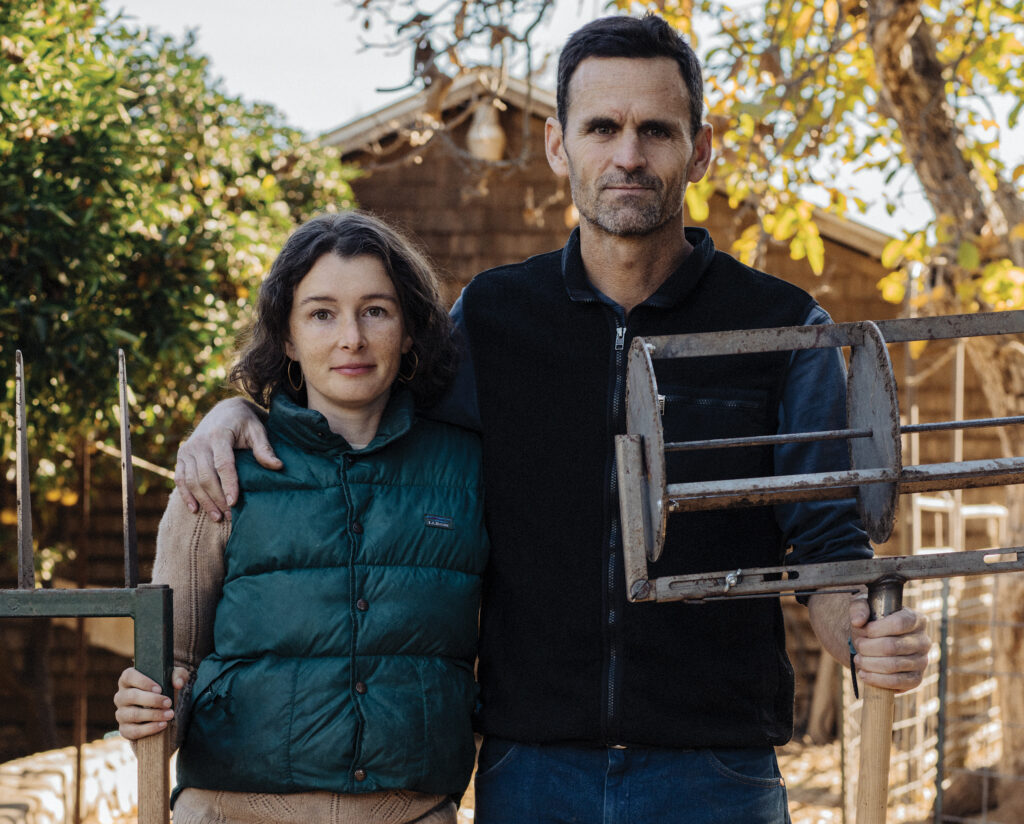
Grace Bueti Malloy of Poco Farm in Ojai, California, recalls her connection vividly. “I had a general family mythology and warm feelings toward agriculture because my uncles were some of the first certified organic farmers on the East Coast, and [Hutchins Farm] just celebrated their 50th year,” she tells The Rooted Journal. “I grew up playing in their fields, sledding down the hill at their farm, and that just felt like a really comfortable, familiar landscape that I felt a lot of belonging to.”
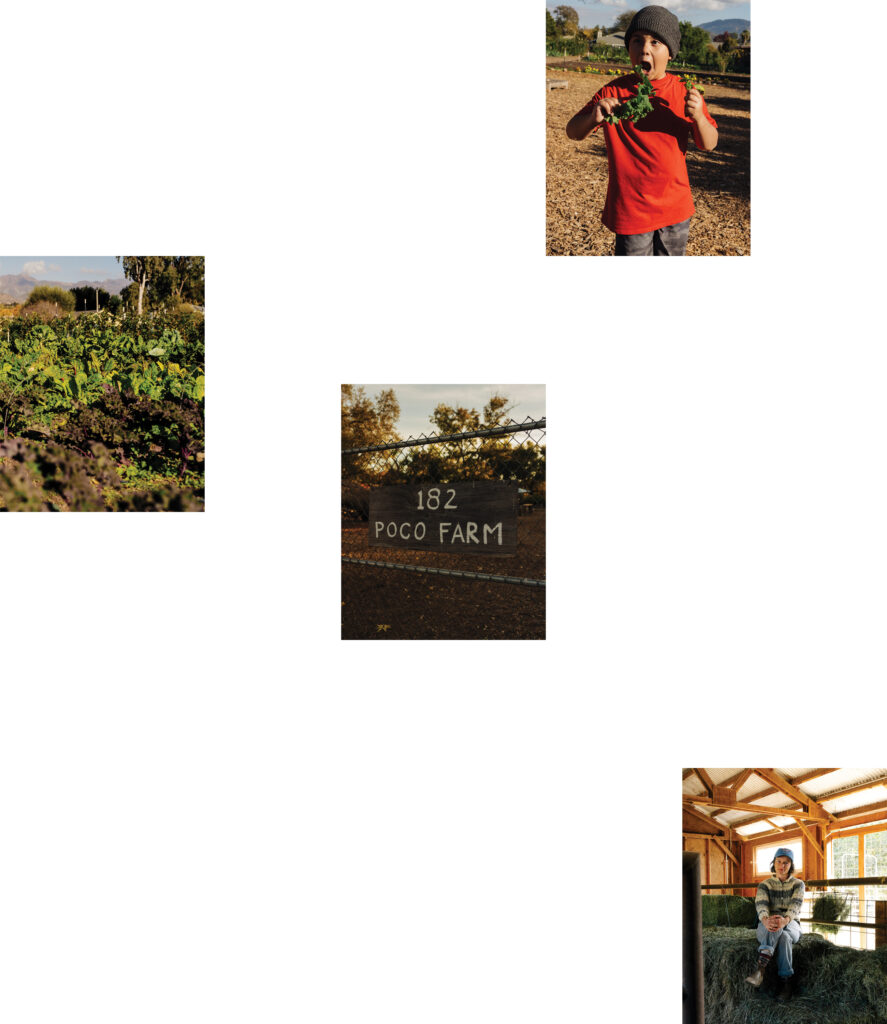
1. A student enjoys his fresh pick.
2. The garden beds are designed so even the tiniest hands can access fresh veggies.
3. Poco Farm is a community hub for everyone in Ojai and the surrounding areas.
4. Grace Bueti Malloy says Poco “is a base farm space where we can demonstrate a lot of different activities.”
She was drawn to books like “Little House on the Prairie,” which romanticized the simplicity of homestead life — the warmth of a crackling fire and a horse tied up outside. She kept those memories in her heart, but it wasn’t until college that she reconnected with those early experiences — and the dirt under her fingernails — that would shape her future. After attending Wesleyan University in Connecticut for two years, she took a break to work at Farmer and the Cook, a hybrid restaurant and farm stand in Ojai — founded by Steve Sprinkel, the farmer, and Olivia Chase, the cook. Grace eventually pivoted to the environmental studies program at University of California, Santa Barbara, so she could continue working on the farm, which has been providing fresh, organic produce to its patrons and its cafe for more than two decades. Sprinkel is also a passionate regenerative farmer who runs the most popular community supported agriculture (CSA) program in the Ojai Valley.
Grace speaks of Sprinkel as sort of an agricultural celebrity who has the kind of charisma that draws people in. During her time on his farm, she saw a lot of locals interested in what he was doing. “All of these teachers, local educational nonprofits, and families were approaching him, wanting to volunteer on the farm or get their kids out for a field trip. Food for Thought, which is another really great local nonprofit that is teaching kids about food and farming, started bringing third grade classes to the farm,” she recalls. Grace was the point person, organizing the curriculum and getting teachers involved. “That’s where I started seeing how essential the impact of farm-based education is,” she says.
Farmer and the Cook was not only a conduit for her purpose-driven mission, but it’s also where she met her husband, professional surfer Dan Malloy. His relentless travel schedule as one of the world’s most recognized surfers meant he missed a few CSA pickups, which prompted Grace to pick up the phone with each abandoned delivery. A chance meeting at the restaurant turned frustration into fondness. “We were head over heels right from the beginning,” Grace says. Dan’s surfing career and environmentalism went hand in hand — Grace remembers him cruising around town in a little biodiesel pickup truck.
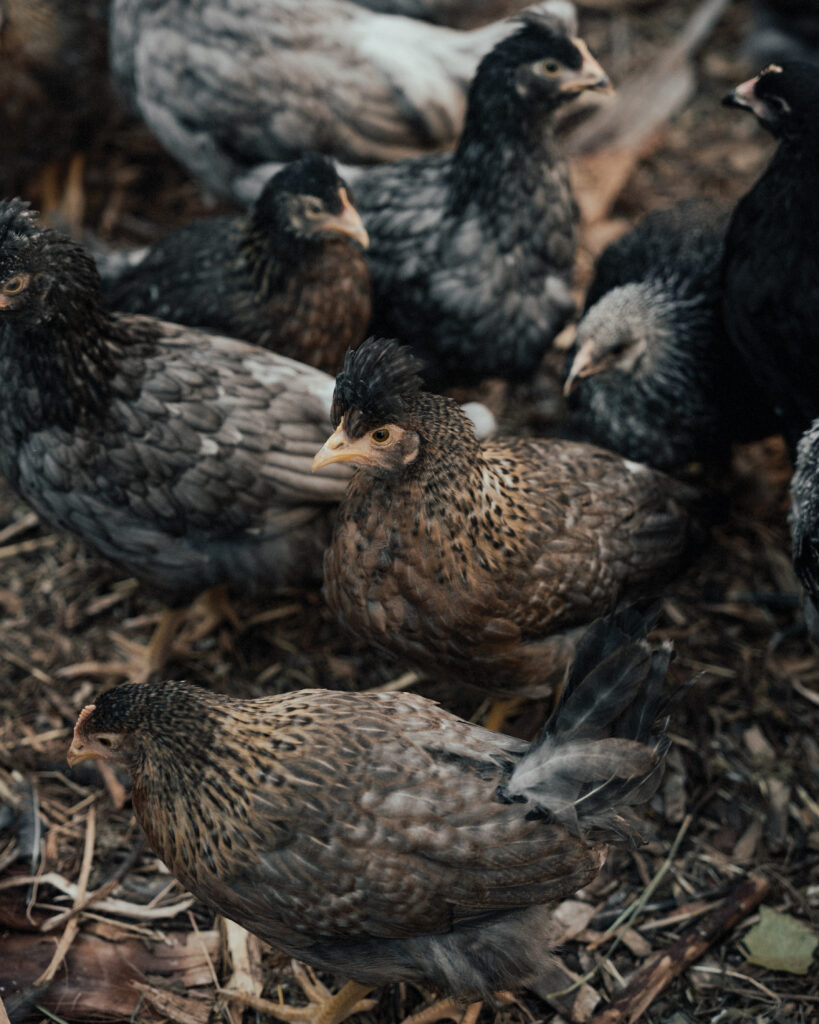
Students are given the opportunity to see where their food comes from, like making breakfast using eggs from Poco’s chickens.
When it came time for the two to settle down, they knew they wanted roots in the valley and a location where Grace could continue merging farming and education. After careful consideration, they found a four-acre plot in the Meiners Oaks area, just three blocks from where Grace had drawn inspiration from Farmer and the Cook. “The second I walked on this land, I thought, ‘Oh, this is exactly what this is. I am going to live here and start a farm-based learning center.’ We’re walking distance to over 2,500 students at 10 local schools,” she says.
The newlyweds leased the back two acres to various growers then added chickens, dairy goats, and pigs, encouraging their friends with families to visit the developing Poco Farm. Grace’s prior relationship with Food for Thought meant fourth and fifth graders now had a place to see a small operation in action, and her vision began to crystallize.
The number of activities Poco offered — like a summer camp with workshops on canning, ice cream making, and how to keep and milk goats — continued to grow, and the response was overwhelming. “The community just very clearly was like, ‘Yes, yes, more!’” she says.
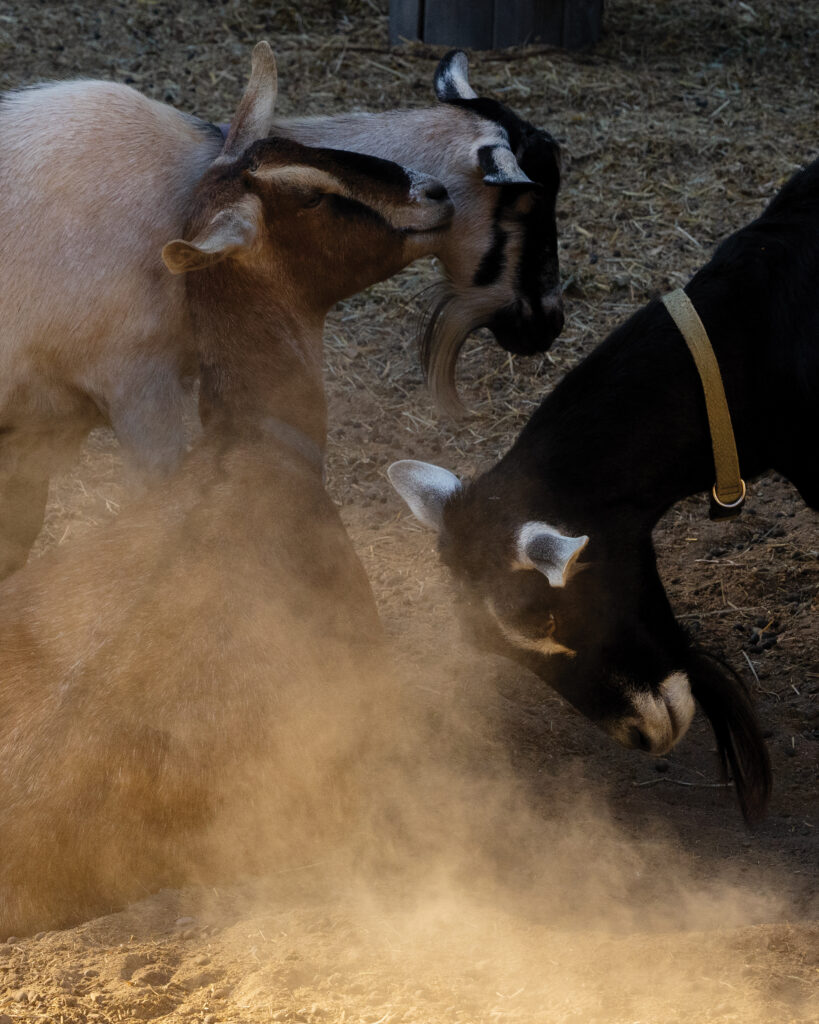

1 & 2. A few of the animal mentors on the farm. Some students learn how to milk these goats.
3. Grace with one of the herd.
This area of Southern California is well known for its agriculture; Ventura County dedicates around 294,000 acres to growing everything from sweet strawberries to leafy salad greens. When the Malloys started Poco Farm, the city of Oxnard occasionally bussed in a few students to learn about farming. Poco co-founder and fellow educator Darrell Forthe encouraged the Malloys to convert the business to a nonprofit since they were charging for the access at that time. Grace says that was the quickest path to making the programming free and accessible.
As schools nationwide struggle to find funding and teachers for programs that provide real-life farm experience, Poco’s nonprofit status means Ojai Unified School District provides bus service for kids to visit, supporting Poco’s free and local programs. Transportation, Grace says, is the biggest barrier to getting the kids’ boots on the ground in the first place. Once they’re on the property, they’re excited by what they see and start asking questions. This inquiry-based learning shows them where food comes from and provides an entry point to a healthier lifestyle, especially for kids who are underserved or whose families struggle financially and are left with no choice but to eat less nutritious food.
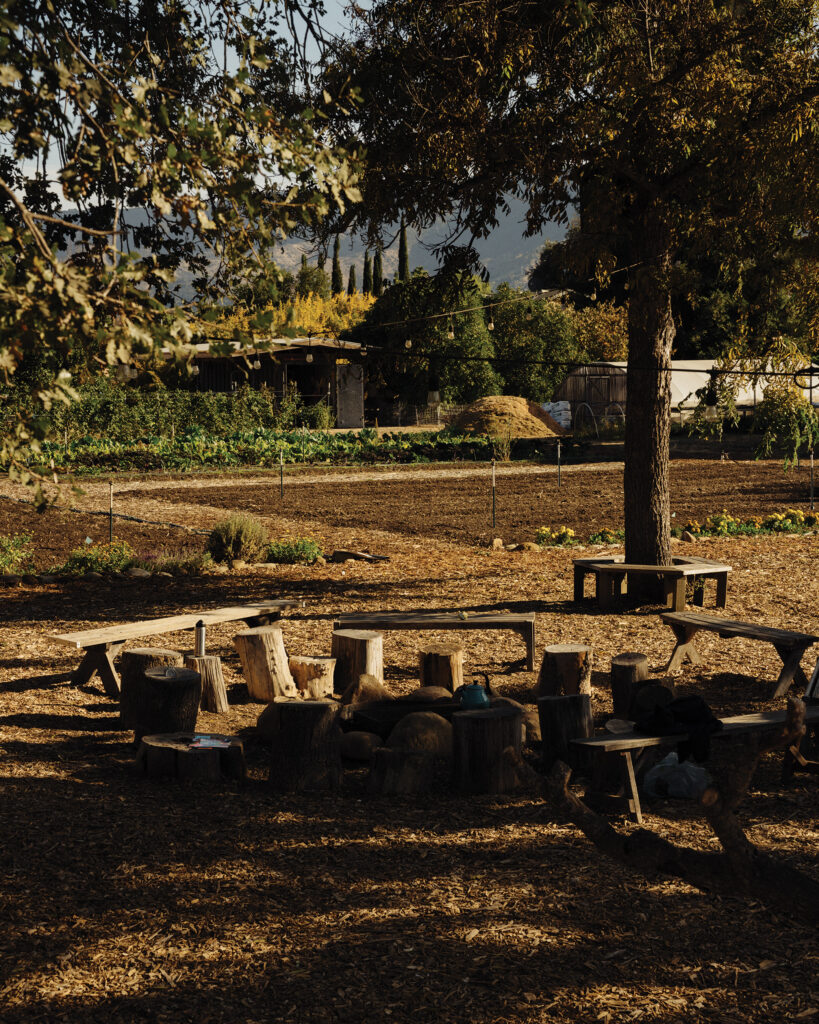
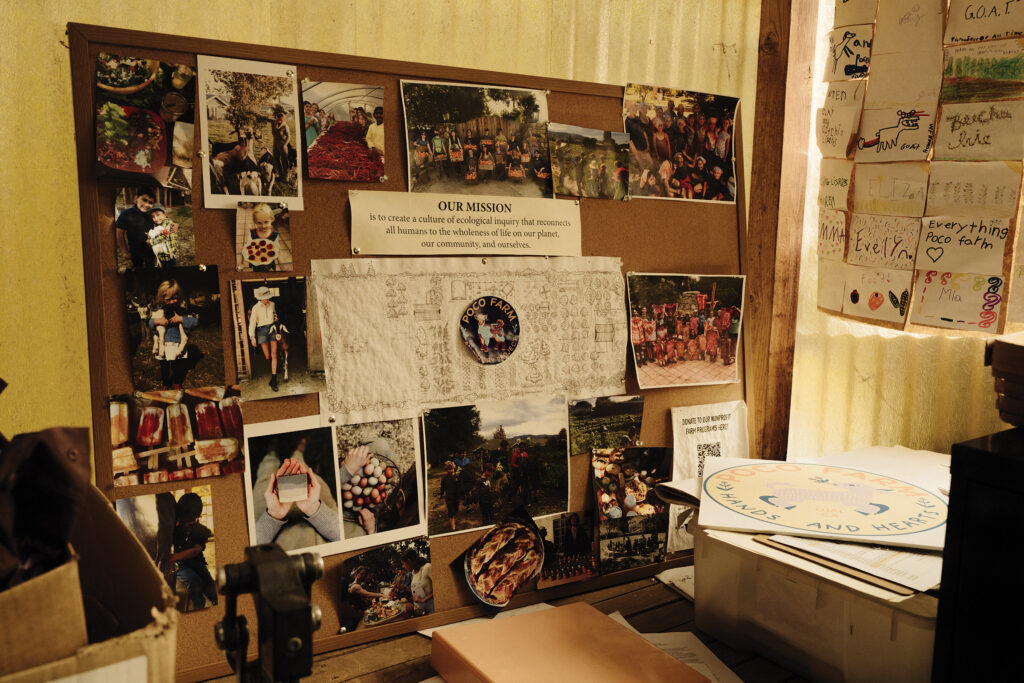
1. A gathering place for students to get better acquainted with their “animal bodies.”
2. The rewards of community are often measured in smiles.
“We’re growing corn with the students, shelling it, grinding it, making masa, making tortillas, and making breakfast quesadillas with eggs from the chickens. We’re getting protein in our snack and eating fruit from the farm and making salads from the farm,” Grace shares. Everything at Poco is grown using regenerative practices, so children also get firsthand experience in what that means for their nutrition long-term. Since everything on Poco is meant to inform and educate, Grace says the 48 no-till, 50-foot growing beds are narrower than conventional ones, providing access for the smallest hands to dig into the dirt.
There’s a sense of rewilding going on at Poco, as Grace talks about the kids getting comfortable in their “animal bodies,” showing respect for the process of interacting with the land, goats, birds, and especially other children. No set curriculum exists, just a gentle demonstration of the possibilities when children are allowed to be free in the natural world.
As Poco grows in popularity, the Malloys and Forthe receive support, including an Elevated Foods grant that will help improve the land and operations for the three pillars of their model: Local education is gaining more and more traction, after-school programs and summer camps extend learning beyond the school day, and increasing yields ensure produce donations continue to feed students and local organizations. “We really have faith that the momentum will continue to build and that this is the right path to be walking for all of us,” Grace says, as I notice a few students in the distance, stuffing their faces full of freshly harvested kale. With farms like Poco around, we can all trust that the next generation is going to be just fine — as long as they can dig in the dirt.