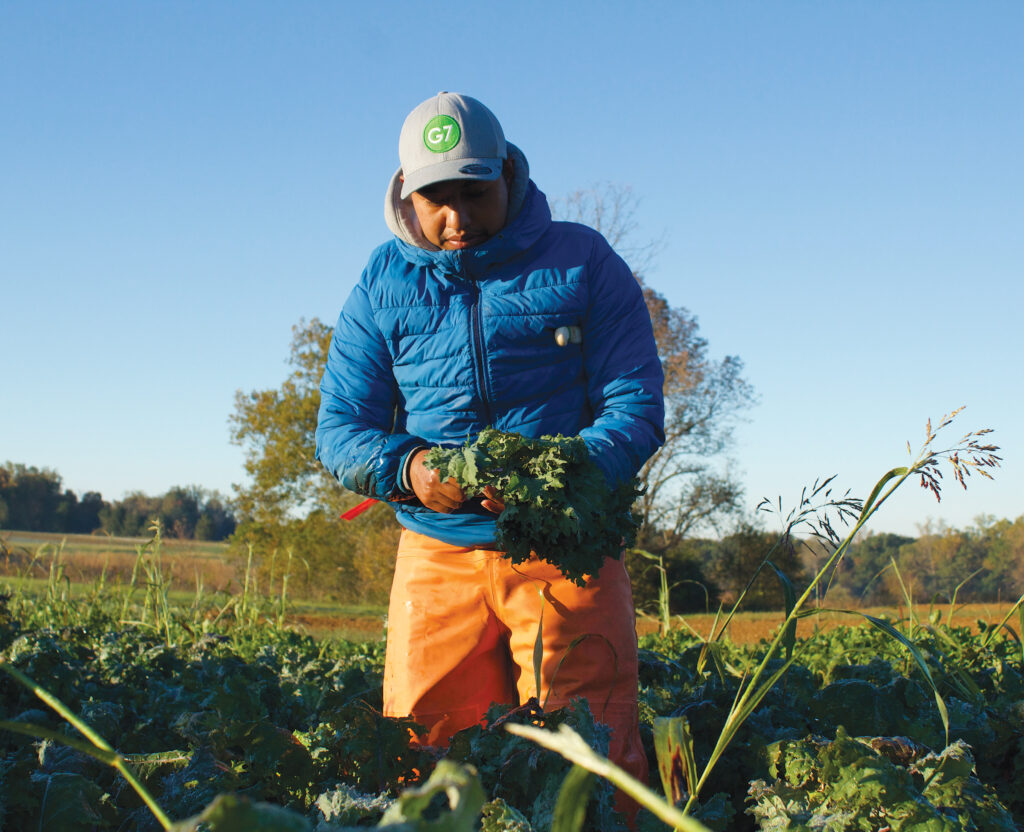
Ben Abell and Bree Pearsall of Rootbound Farm have one major goal for the 350 acres they manage in Crestwood, Kentucky: to constantly regenerate the soil that helps sustain their livelihoods. The couple, who founded Rootbound Farm more than a decade ago, have leaned into that farming philosophy for their 50 acres of cropland, where they grow more than 45 types of produce, and their 300 acres of pasture, where Katahdin sheep and chickens roam.
Their vision for the property has been clear from the start. “What we wanted to do when we leased this farm is, we wanted to become stewards of the entire landscape,” Abell tells The Rooted Journal. “We wanted to look at the entire landscape through a lens of regeneration and how we could steward and regenerate all of our soils — not just our crop soils.”
The proof of their mission is in the certified organic produce, meat, and eggs they distribute at farmers’ markets in Louisville; to local restaurants and small grocery stores in nearby cities; to wholesale clients, including the distribution company What Chefs Want; and in their community supported agriculture (CSA) share, which Abell estimates makes up about 65% of their business. Like many small businesses, Rootbound didn’t hit the ground running. It has taken continual reinvestment and learning season by season to grow into the farm it is today.
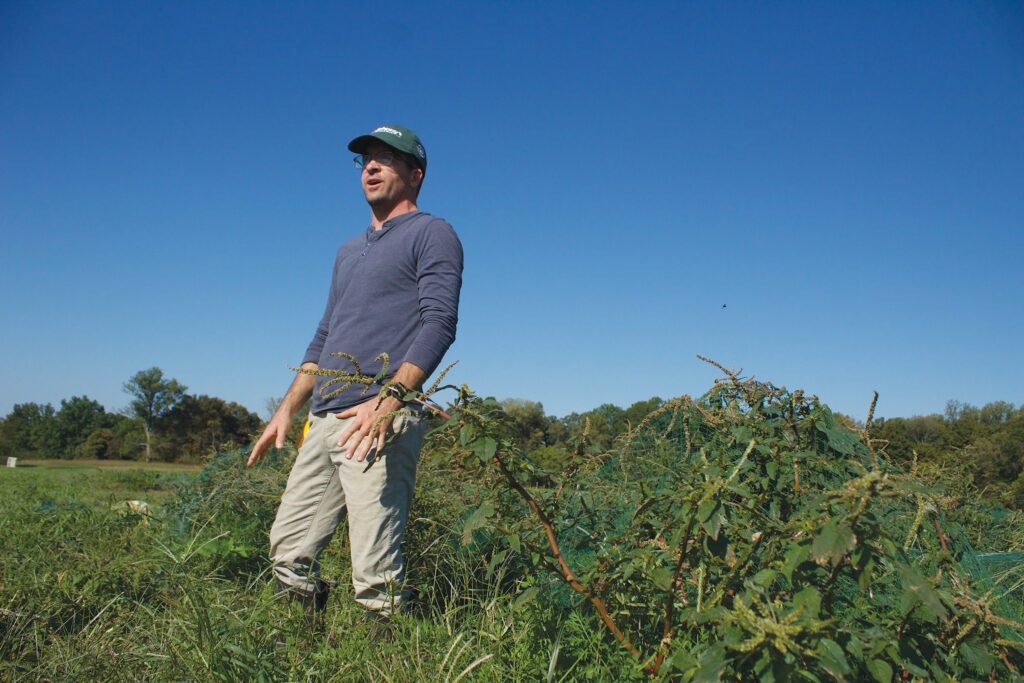
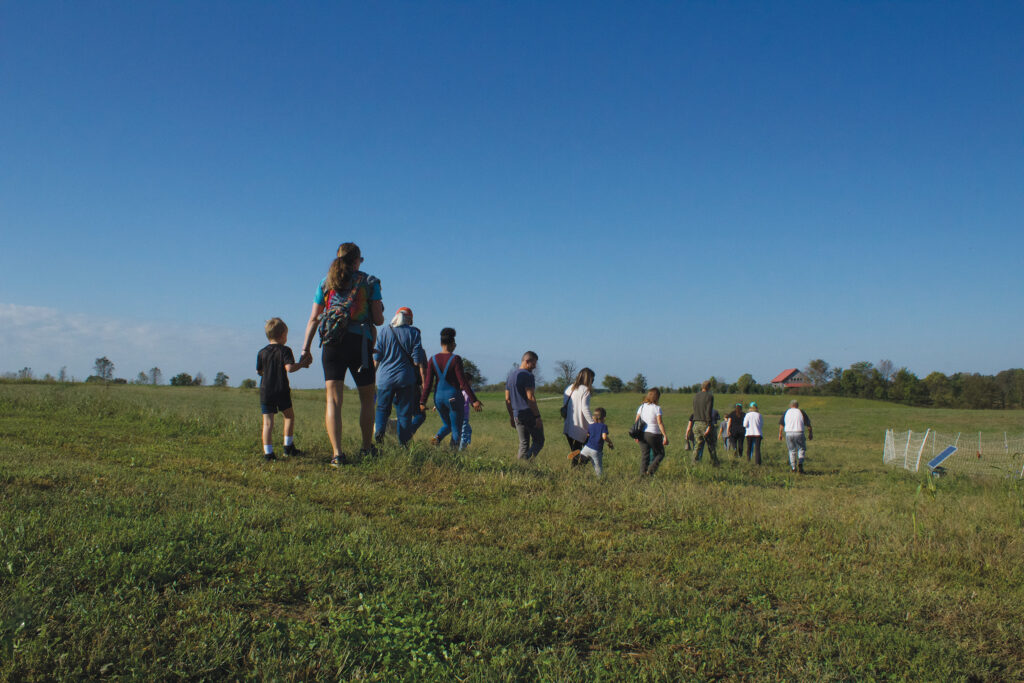
1. Instead of carrying a hefty mortgage, Abell says Rootbound leases the land so they can heavily invest in pushing the limits of their production.
2. Regular farm walks bring the community closer to Rootbound’s process like making a connection between modern intercropping practices and their origins in indigenous land stewardship.
A Changing Landscape
Abell grew up in a family that gardened and valued land stewardship. He followed their example to the University of Kentucky, where he and Pearsall met, and he earned a bachelor’s degree in agriculture. While Abell worked on farms across California and central Kentucky, honing the belief system that he practices at Rootbound today, Pearsall put her master’s degree in social work from the University of Washington to good use until she decided to help Abell focus on farming, which the couple has been doing full-time since launching Rootbound Farm in 2013.
Previously, the farmland was used for traditional cattle farming and had hosted row crops, like corn and soybeans. It was vacant when Abell and Pearsall were looking to expand their side hustle, growing and selling produce to wholesale businesses. The property also had several draws for the type of operation they wanted Rootbound to be, including houses for the couple —who now have two kids — and their staff, barns, and infrastructure to store and process crops.
Leasing rather than purchasing land allowed them to invest their capital in growing their business rather than paying down a mortgage. Because the farm is only about a 30-minute drive to Louisville, the land is pricier than it would be farther afield. But being close to a city was important to Abell and Pearsall, not only so they could conveniently distribute their produce but also so that their customers could easily visit the farm. “Fundamental to what we do is helping people see how we grow produce, how growing certified organic produce in Kentucky is different,” Abell says. “To get out here on the farm and see that in person is really priceless.”
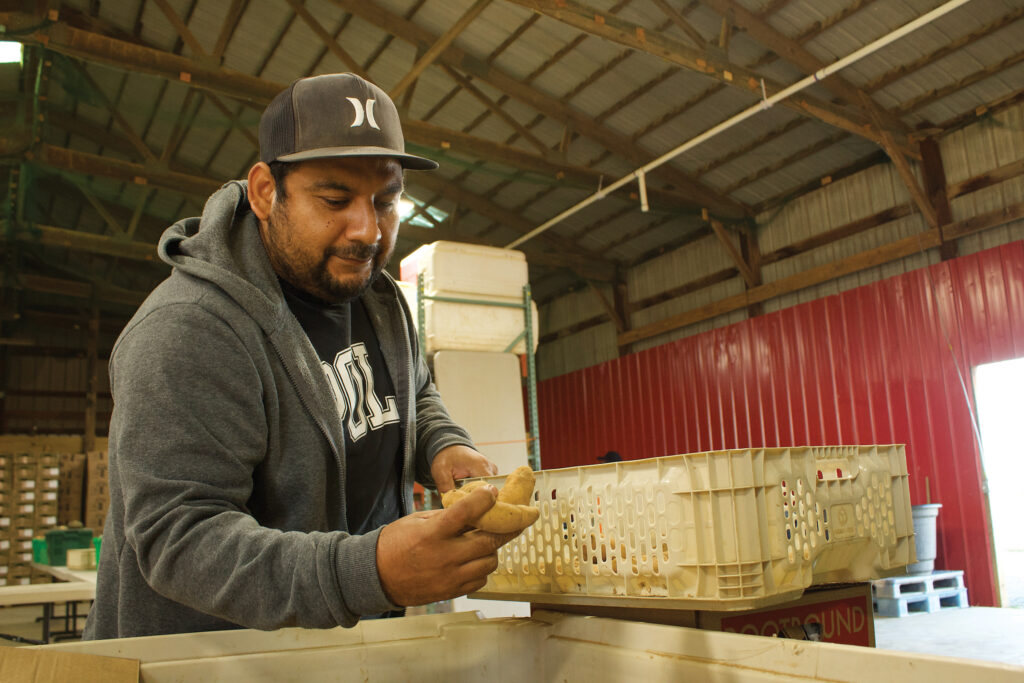
Rootbound employs 24 year-round and seasonal workers to steward the land.
Growing Their CSA
The cornerstone of Rootbound Farm’s business is its CSA program, which runs weekly May through December and every two weeks January through April, offering “a seasonal arc of eating,” Abell says. In the spring that means vegetables like lettuce, spinach, radishes, turnips, and bunched greens. The farm adds cauliflower, broccoli, cabbage, yellow squash, zucchini, and cucumbers as the weather allows. Late June and early July usher in tomatoes, peppers, watermelons, green beans, sweet corn, eggplant, and “the other favorites of summer,” Abell says. Beginning in September through late December, the focus returns to cool-weather cole crops.
“We’re trying to provide the full range of produce that we can grow well here in Kentucky,” Abell says. “We’re trying to provide a diverse, healthy diet for our customers, and we’re trying to push the limits of seasonal production.”
Abell and Pearsall have elongated Rootbound’s CSA season, which used to end in mid-October, by expanding their farming knowledge and growing crops with the assistance of row covers, frost blankets, and high tunnels for climate control. They have also invested in infrastructure to store crops more effectively — retrofitting old barns with insulation and concrete floors, using humidity and temperature controls, and expanding their walk-in coolers to preserve harvested crops, like winter squash, potatoes, sweet potatoes, carrots, and beets. It’s these stored crops, along with greens grown in high tunnels, that CSA customers receive January through April.
Rootbound Farm’s CSA caters to about 800 members annually, with boxes delivered to more than 25 pick-up locations in Louisville, Lexington, and Frankfort five days a week. Members sign up for anywhere from four to 32 weeks at a time and can choose a small, five-to-seven item box, a seven-to-10 item box, or a robust box of eight to 12 items), all of which are customizable. A weekly email details the produce available, and customers place their order through Farmigo, a CSA-specific software. “It’s a lot easier just to tell everybody what they’re getting, but ultimately, we want people to really enjoy the product, and a customizable CSA makes our customers’ experience so much better,” Abell says.
Rootbound’s shift from wholesale to CSA was fueled by Abell and Pearsall’s desire to be integral to feeding nearby communities, but it’s also because Crestwood’s variable climate creates new challenges every year in growing organic produce. “When we’re growing for a CSA, we’re spreading out our risk among 45 different crops,” Abell says. “And we’re also spreading out our risk among 800 different customers,” as opposed to one or two big wholesale accounts.
As a certified organic farm that adheres to federal standards by eschewing the use of synthetic chemicals, fertilizers, and sprays, Rootbound Farm calls insects, pests, diseases, and weeds its main challenges. That’s why Absell and Pearsall use row covers to protect from insect damage, interplanting to minimize the effects of pests, and crop rotation to keep soil healthy.
The pasture’s a busy place, where smart systems support the soil, and customers can reap the benefits too. Rootbound’s 1,700 laying hens are kept in mobile coops that are rotated to fresh grass a few times a week — giving them new grasses and insects to feast on while spreading the hens’ manure. There are also about 230 ewes and a seasonal flock of 400 sheep. CSA members can add poultry and eggs, as well as 100% grass-fed and -finished lamb to their boxes.
Abell says this year’s watermelon field will be plowed under and planted with a cover crop of oats, peas, and tillage radishes to generate organic matter and build soil carbon, prevent erosion, and fix nitrogen levels and restore fertility to the soil. The livestock will graze the field in late October to eat the cover crop and deposit their nutrient-rich manure in the field. It’s all in service of strengthening the soil for next season’s crops.
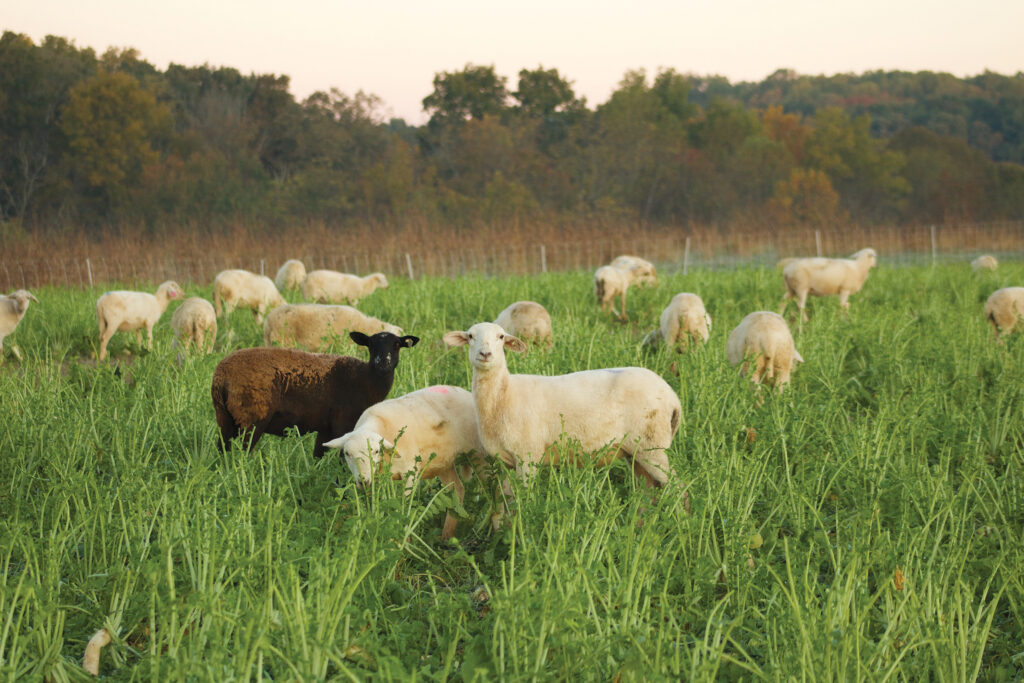
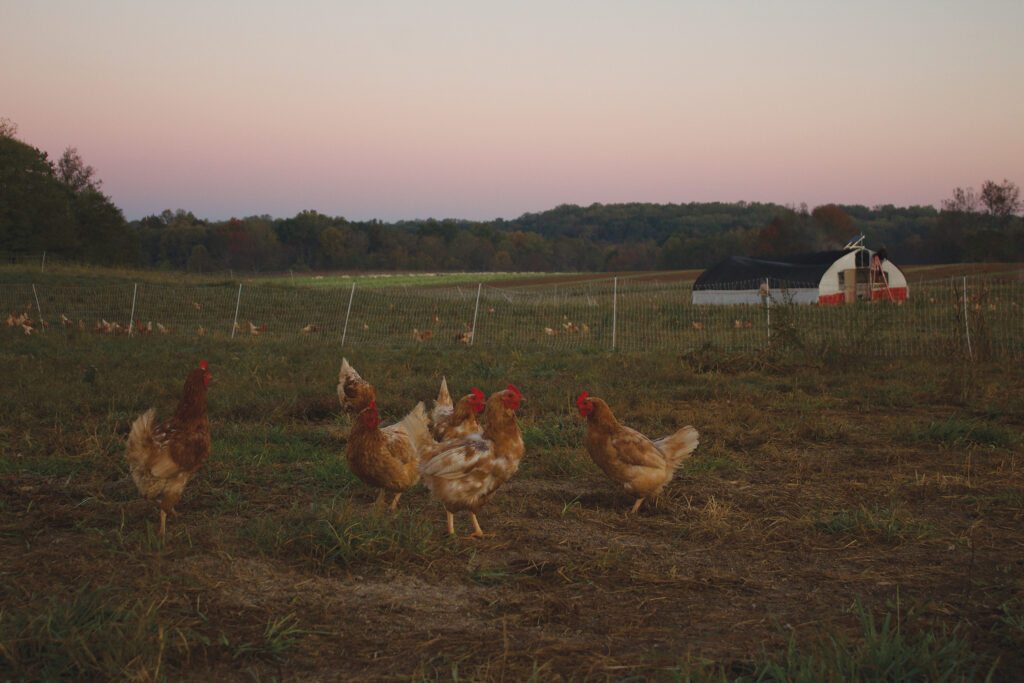
Close to 300 lambs were born on the farm last year contributing to the benefits of rotational grazing. Chickens help too, aerating and fertilizing the soil as they scratch and search for food.
Eyes to the Future
The Partnership for Climate-Smart Commodities grant Rootbound Farm received from Elevated Foods will allow Abell and Pearsall to increase their focus on soil health. “Sometimes on a farm, it’s hard to put certain practices in place simply from a budget standpoint,” Abell says. “Opportunities like the Elevated Foods grant give us the financial flexibility to implement those practices.”
They plan to increase the diversity and frequency of their cover crops and reduce their tillage passes by about 70% by investing in an articulating spader. This machine with rotating spades is a low-horsepower alternative to plowing and preserves the soil structure while cultivating it. By maintaining the soil layers more wholly, they’re hoping to increase their soil organic matter and the health and diversity of their soil microbiome.
For Abell, the farm’s future profitability isn’t about dollars and cents — it’s about reinvesting in the landscape and the 24 year-round and seasonal employees who help steward it. “We’ve got to turn that profit in order to make those investments, but we also have to be doing that while building our soil, building the health of our pasture land, and building the health of our cropland,” he says. “Ultimately, that’s the bank we’re really counting on to continue this operation into the future.”