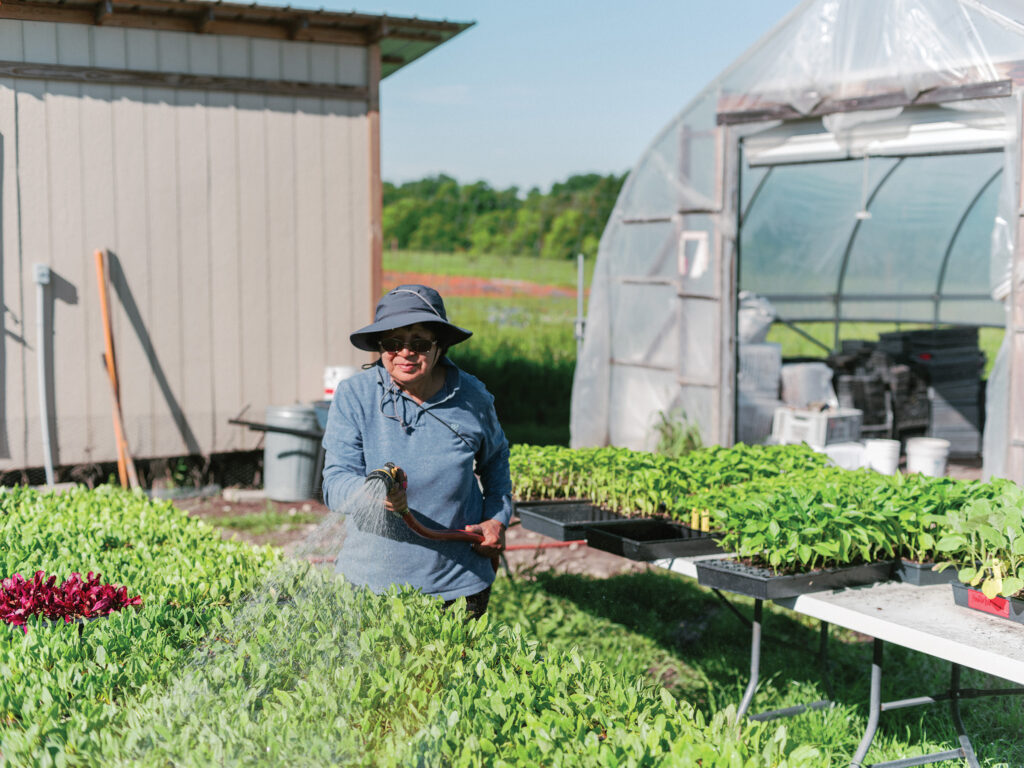
It’s late October, and Esther Cing is standing waist-deep in a patch of roselle hibiscus plants, a woven hat shielding her face from the Texas sun. All around her, magenta branches bow under the weight of their calyxes — the young leaves that surround the seeds at the base of the flower — which are small, rotund, and juicy-red. Cing moves from plant to plant with a pair of pruning shears. She snips the heads, and they fall with a subtle thud into her green pail.
“I eat [roselle] every day,” Cing tells The Rooted Journal, explaining that she likes to fry the leaves with bamboo shoots and fish paste. It makes her happy to be cultivating this shrub in the United States, since she also grew it in her garden in Chin State in Myanmar, which she was forced to flee in 2013. “All Burmese people plant roselle,” she says.
Cing is harvesting roselle hibiscus for a tea company that contracts with the Refugee Collective Farm (RCF), where she has worked since 2020. Located in Elgin, about 30 minutes northeast of downtown Austin, the organization provides jobs to refugees in the Austin area while also increasing their access to the fruits and vegetables they once enjoyed in their countries of origin.
“We’ve heard anecdotally from our employees that they and their families often experience a decline in health upon coming to the States,” says farm manager Matt Simon. “This can have many causes, [including] lack of access to grocery stores that carry fresh, culturally desired produce where they live.”
Texas has resettled more than 44,000 refugees — including people from Myanmar, the Democratic Republic of Congo, and Afghanistan — since 2013, more than any other state. In 2009, a group of refugees and locals in Austin formed what’s now called the Refugee Collective to help displaced foreigners earn income through farming and textile making. “Two things [they] expressed were the desire to get their hands in the dirt and grow food for themselves and to sew to make things for their families,” says co-founder and CEO Meg Erskine.
The nonprofit’s agricultural arm started small, with three community gardens. Nearly a decade later, RCF has expanded into a 20-acre property, thanks to a local landowner who leases it to the organization at a low rate. It currently farms four acres with 33 fields, each measuring 50 by 100 feet — the exact size of its mobile chicken coop. After each block is harvested, 130 Production Red chickens move in for a month, gobbling grasshoppers and pooping out fertilizer ahead of the next planting season. It’s one of the regenerative agriculture methods that RCF has embraced as part of its Resilient Farm Plan, the first of its kind in Texas. (The plan follows the Carbon Farm Planning framework developed by the Carbon Cycle Institute in California.) When fully implemented, the farm could sequester 345 metric tons of carbon dioxide per year — the equivalent of taking 77 cars off the road.
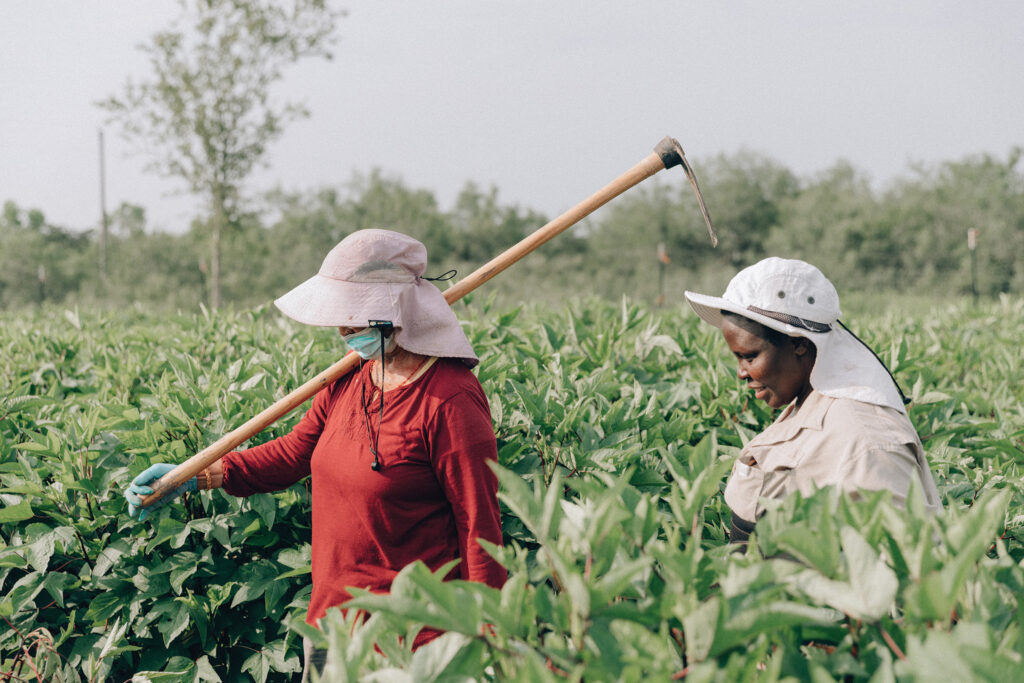
On the Texas Refugee Collective Farm many grow vegetables from their native countries to get the nutrition they’re used to.
Farm team members also bring unique horticultural practices and knowledge rooted in their respective cultures. A few years ago, Simon asked a couple of farmworkers to weed a bed of greens, and when he returned, he noticed they had left behind a tall, straggly plant. When asked why, they told him it was lamb’s-quarters — not only edible but tasty and nutrient-dense, too. According to Simon, there’s more interplanting — like growing squash, beans, and corn with potatoes, or daikon radish alongside other fall brassica crops, such as broccoli and cabbage — than you might see at a typical operation.
The Refugee Collective Farm employs six refugees full-time and another three during the roselle harvest. Since many refugees lack transportation, the organization provides rides to and from work. It also offers biweekly English classes on the clock. “We’ve found that elderly refugees particularly appreciate it, because they just don’t have that many other opportunities,” Simon says.
Out of a desire to help even more refugees earn supplemental incomes, RCF started its Community Farmer training program two years ago, with a grant from the U.S. Department of Agriculture’s Refugee Agricultural Partnership Program. Participants — including Cing and her husband, Abraham — get 24 hours of production-scale agricultural training, plus 75 square feet of earth and all the seeds, compost, and tools to go with it.
The farmers cultivate the same varieties of produce they cooked with in their home countries. Simon says that Congolese workers favor bitter, green eggplants called gboma, while workers from Bhutan grow hot Dalle Khursani peppers, which they combine with mustard greens to make a hearty fermented dish called gundruk. This cultural consideration extends to the farm’s Community Supported Agriculture (CSA) program. “We’ve actually been able to tailor an Afghan CSA, where we don’t give them the stuff that they would throw away,” Simon says, explaining that many Afghans prefer fresh greens for salads, while Congolese people generally favor greens they can cook, like amaranth and callaloo.
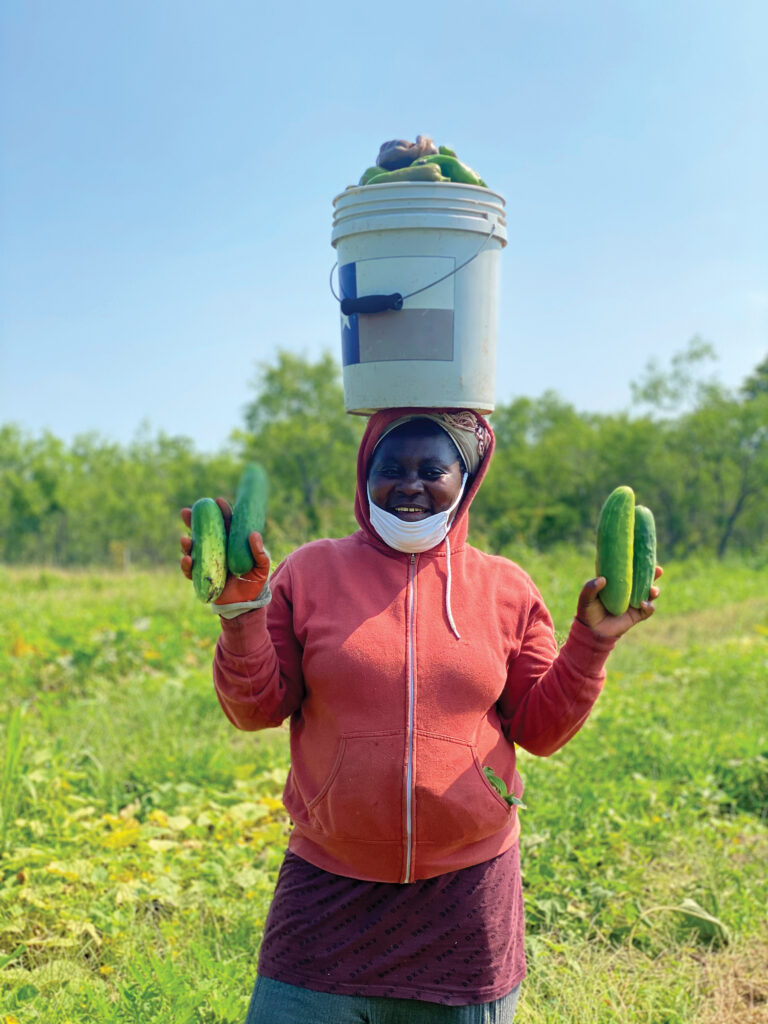
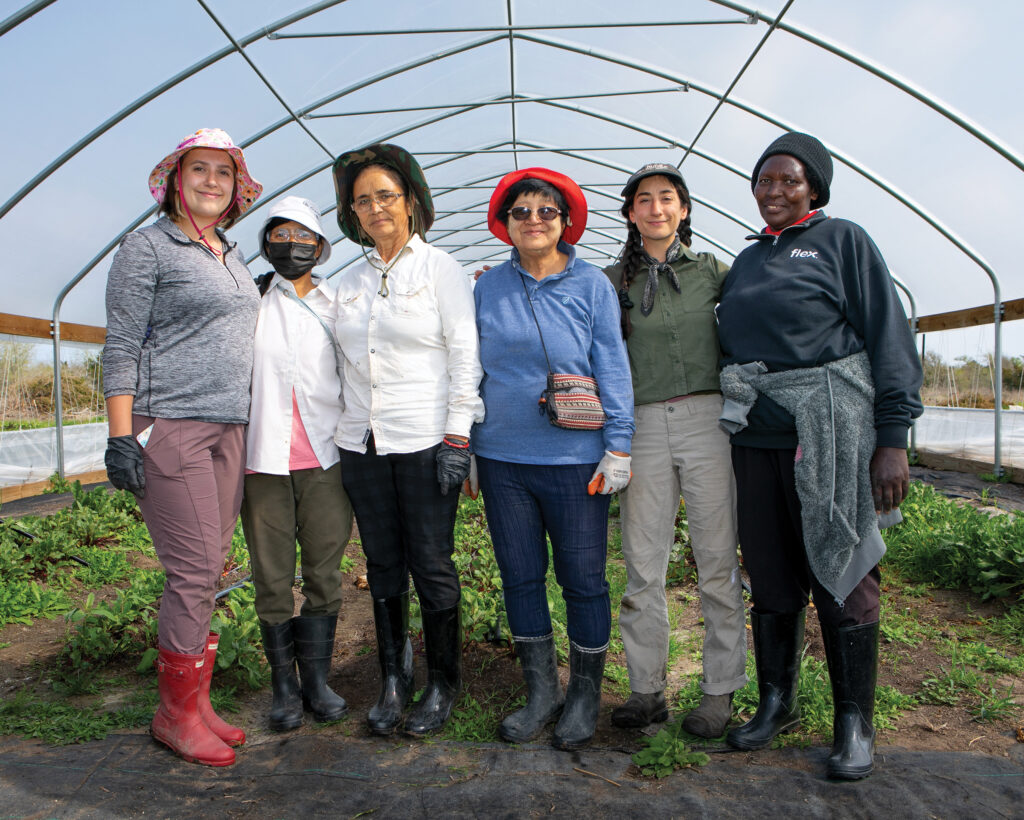
The Texas Refugee Collective has resettled more than 44,000 refugees coming from Myanmar, the Democratic Republic of Congo, and Afghanistan. They’re given a second chance earning income and given the opportunity to grow what is familiar to them.
For the past two years, the Refugee Collective has purchased the crops produced by Community Farmers with funding from the American Rescue Plan Act (ARPA) and given them to refugees in need. Along with CSA shares donated from the farm’s fields, the nonprofit has provided 32,700 pounds of fresh produce free of charge to some 4,500 refugees in the Austin area — most newly arrived, and 34% of whom live at or below the poverty level. Simon says this helps fill the gaps in dietary needs left by what food banks can offer, helping refugees enjoy healthy fruits and vegetables while they await benefits from the Supplemental Nutrition Assistance Program (SNAP), which is severely backlogged in Texas.
After the ARPA funding runs out, they’ll connect Community Farmers to sales partners like Farmshare Austin, which reaches folks who live in food deserts and accepts SNAP. “This will help build familiarity with the business side of farming, which is currently taught in the [training] course but not explicitly practiced,” Simon says.
In August, Esther and Abraham Cing graduated from the program alongside 16 others. Most chose to continue on with community gardening plots to feed their families. But the Cings have more ambitious plans to start their own agricultural enterprise. They’re participating in RCF’s pilot Business Incubator program to learn additional skills, like planting in succession for a consistent supply and post-harvest handling techniques to keep produce as fresh as possible. They’ve already planted their first crop in a small field at the front of the farm: roselle.