Almost 40% of land in the United States, about 880 million acres, is dedicated to farmland for food production. Nearly half of this acreage is subjected to monoculture farming, which has stripped soil of the nutrients needed to produce healthy food. Organizations and sustainability movements around the world are advocating for a return to regenerative farming, which uses fewer chemicals and crop rotation to increase nutrients in our soil, in turn improving the quality of our food. One such organization is Farmer’s Footprint.
Farmer’s Footprint provides funding, supports community-building initiatives, and creates educational resources and informational campaigns for both farmers and the general public, all in service of regenerative farming. Through storytelling that highlights indigenous communities, seasoned farmers, and health experts, Farmer’s Footprint aims to inspire a collective shift toward regenerative practices to help reshape food systems for environmental and human well-being. The U.S.-founded organization now has an international presence in Mexico, New Zealand, and Italy, among other countries. Here, Alana Mooi, the managing director at Farmer’s Footprint, tells The Rooted Journal more about the organization’s mission for a healthier, more holistic approach to agriculture.
This interview has been edited for length and clarity.
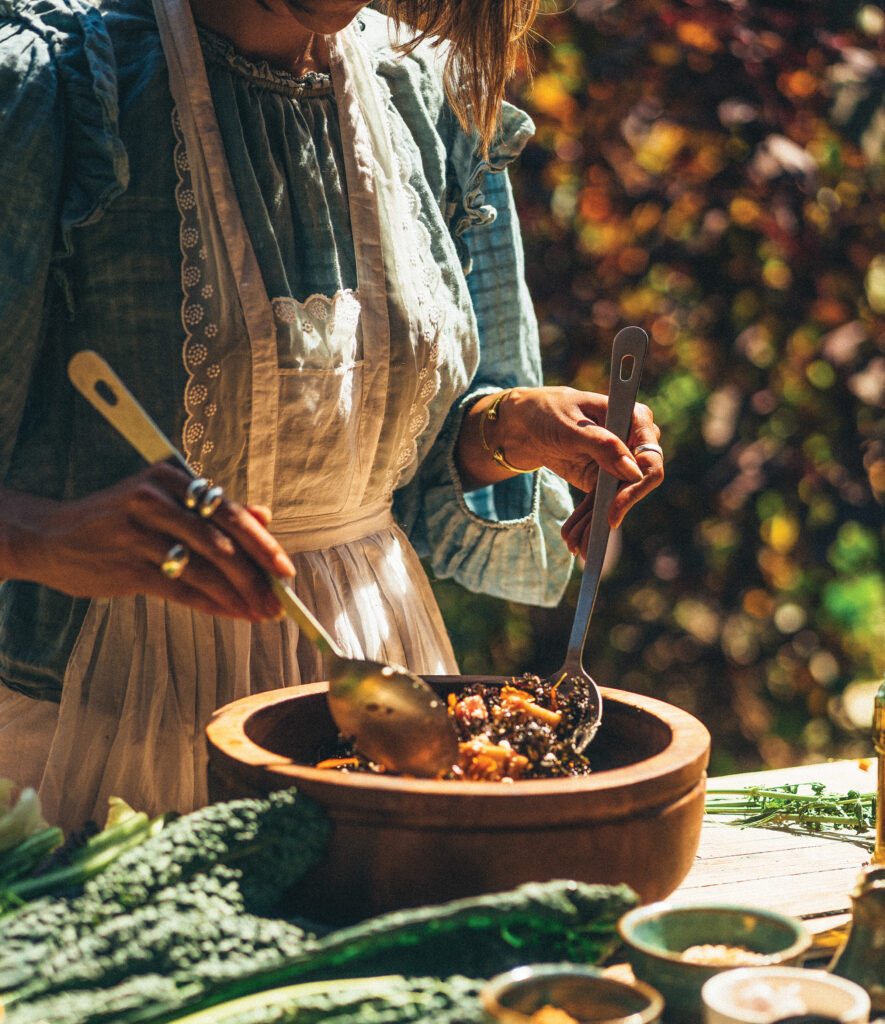
1. Mooi traveled to Xochimilco in Mexico City to harvest and cook fresh ingredients from Arca Tierra, a project reviving the prehispanic chinampa farming tradition by connecting local consumers with regenerative agriculture.
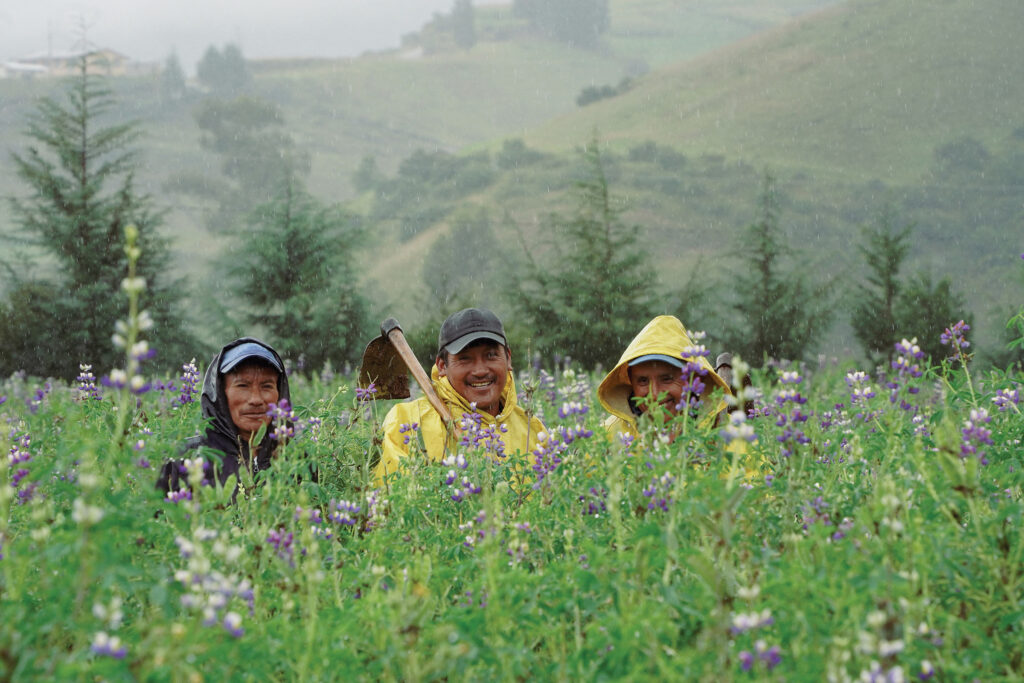
2. Chocho, grown by indigenous Andean farmers in Ecuador, is a nutrient-dense, regenerative superfood that doubles as a cover crop.
THE ROOTED JOURNAL How does Farmer’s Footprint spread its message of regenerative farming?
Alana Mooi We seek to unite the agricultural and health systems so that more people can realize that planetary health is human health. We focus on education, awareness, coalition building, and inspiration. We’ve developed three main pillars of our storytelling work around agriculture, health, and culture. We offer tangible tools and resources on how people can take action based on the stories that we share.
TRJ What does that look like in practice?
AM We collaborate with organizations that are doing grassroots work, whether on a farm level or at a policy level, or even at a community level. We connect to different creatives, like filmmakers, photographers, writers, and more, to craft storytelling pieces in the form of communication campaigns, short documentaries, etc., so that more people can be aware of these topics. They can take action alongside these initiatives — at a policy level or on a more local level.
An example could be our glyphosate campaign. We launched a petition to mobilize our growing network of community members around banning glyphosate in the United States, and that petition eventually made it to Senator Cory Booker [D-NJ]. We hosted a free community webinar that raised awareness about the problems associated with glyphosate from a farmer’s perspective, from a planetary perspective, from a human health perspective, and from a policy activism standpoint.
We share a lot of stories about farmers and health practitioners. We also have a digital Farmer’s Footprint Community hosted on the Mighty Networks platform, where we offer educational courses around topics like how to grow food in your backyard. We connect people that come our way to resources, tools, and learning and networking opportunities. For example, if there’s a farmer looking to transition from conventional to regenerative practices, we would connect them with other growers that could help them on their journey.
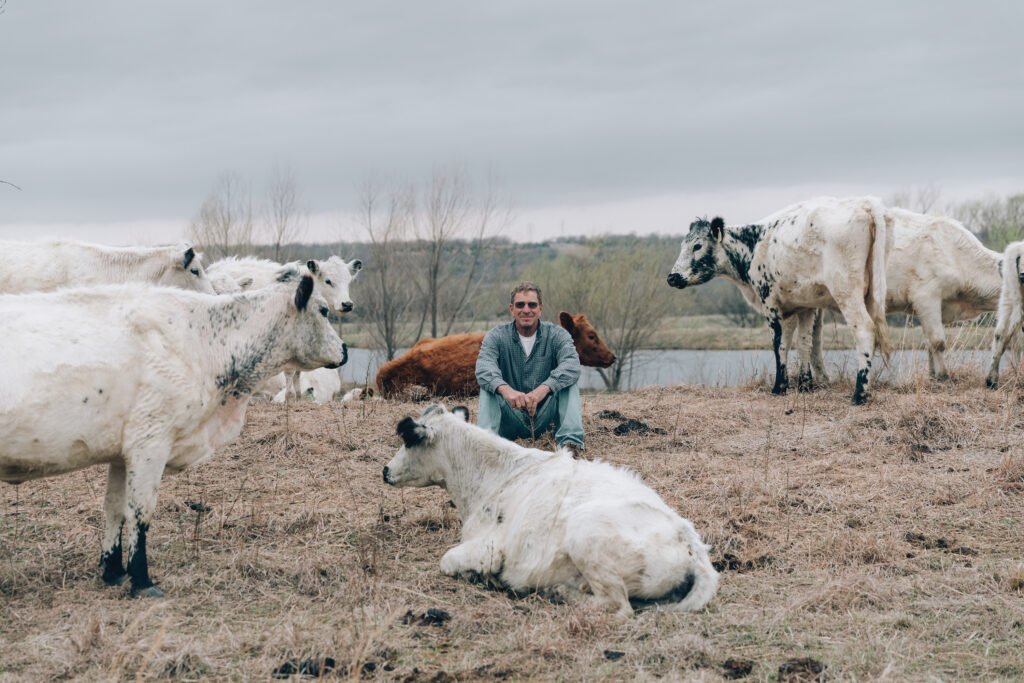
ail Fuller, a dedicated farmer and founder of Fuller Field School, where he advocates for regenerative agriculture, healthier soils, and farmer well-being.
TRJ Where should a farmer or food producer go to get this kind of help?
AM A great place to start would be to join our free Mighty Networks Farmer’s Footprint Community. Each farmer’s journey is so unique, and there’s no one-size-fits-all solution. When a farmer comes into the Farmer’s Footprint Community, depending on where they are in their transition to regenerative, we see who we can connect them to. In the past, we offered a program called The Nest, where we developed websites and other marketing materials for small-scale farmers so that they can have more ways to sell their product or connect with brands looking to source regenerative ingredients. We help them diversify their revenue streams to lower their risk. We also have a lot of educational materials that farmers can share with their customers, whether at a farmers’ market or in their local grocery store, so they can educate consumers about why their regeneratively grown products are more expensive and better for them and for their local community.
TRJ What are some challenges you face when trying to support those farmers?
AM The support that they need to be more successful in their regenerative operation or business model varies a lot. It will depend if the farmers are selling directly to consumers or if they’re selling wholesale or to restaurants. Some farms try new things, like an agro-tourism or educational component. Some are looking for ways to sell more value-added products, so they might be looking for partners to develop those.
When [people] criticize industrial farming, we often forget that farmers are already under so much stress. They need to get loans to make it work. They need to buy all these fertilizers. Mental health barriers are also huge. Depression rates amongst the farmer community are off the charts. So I think the first thing we need to do as a general public, when we ask farmers to transition, is to support them in that transition and stand alongside them as a community.
TRJ How does Farmer’s Footprint incorporate global indigenous teachings?
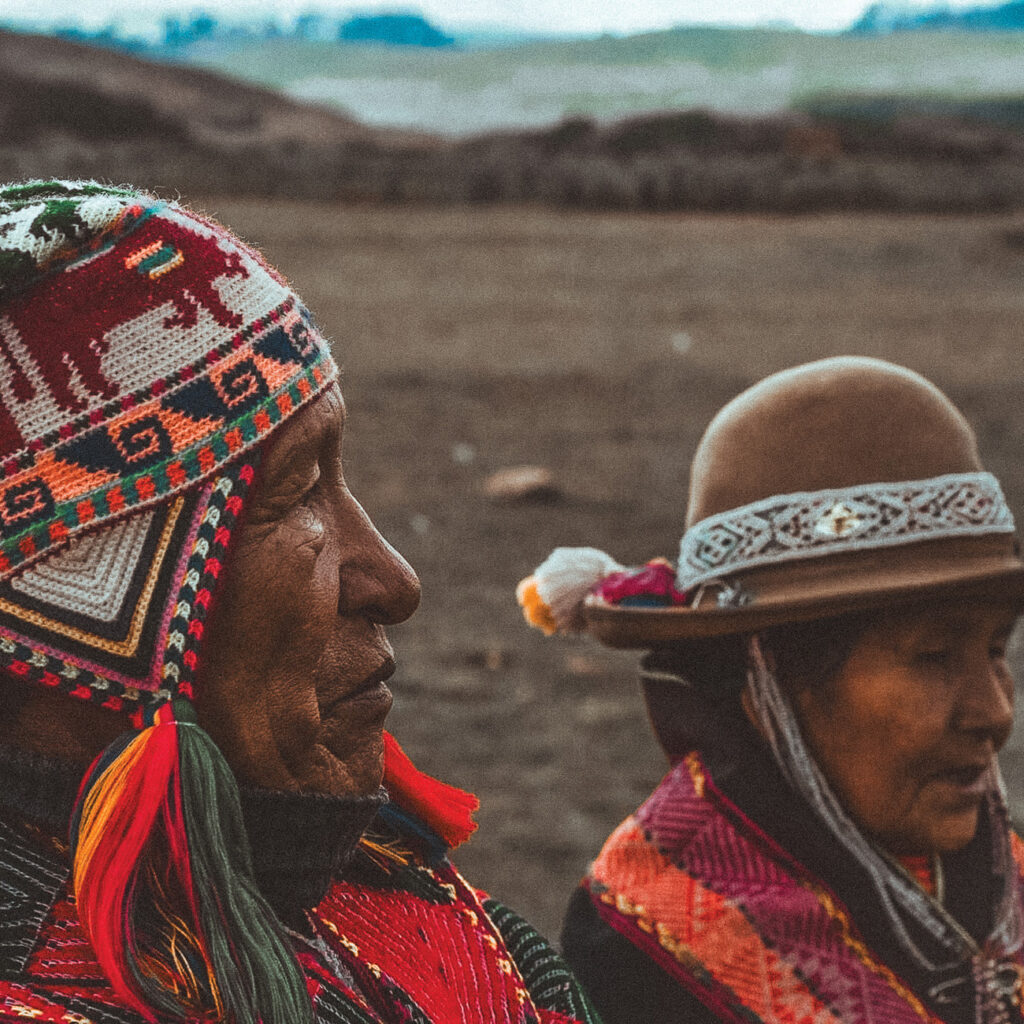
AM Like I mentioned, we have three pillars: agriculture, health, and culture. The indigenous knowledge systems really come through the culture pillar. We share different stories and dialogues with indigenous elders from around the world to learn about their growing traditions.
We seek to shift perspectives and acknowledge how a lot of the blueprint of what we could do differently, as human beings interested in regeneration, is alive in communities in the Global South. When we facilitate these dialogues between the Global North and the Global South and share stories from indigenous communities, it is with the intention to have mutual acknowledgement of how both ways of approaching systems are really valuable. It’s not a fight against technology or against development. It’s about seeing the impact that embracing nature’s processes could have, rather than colonizing them or trying to control them.
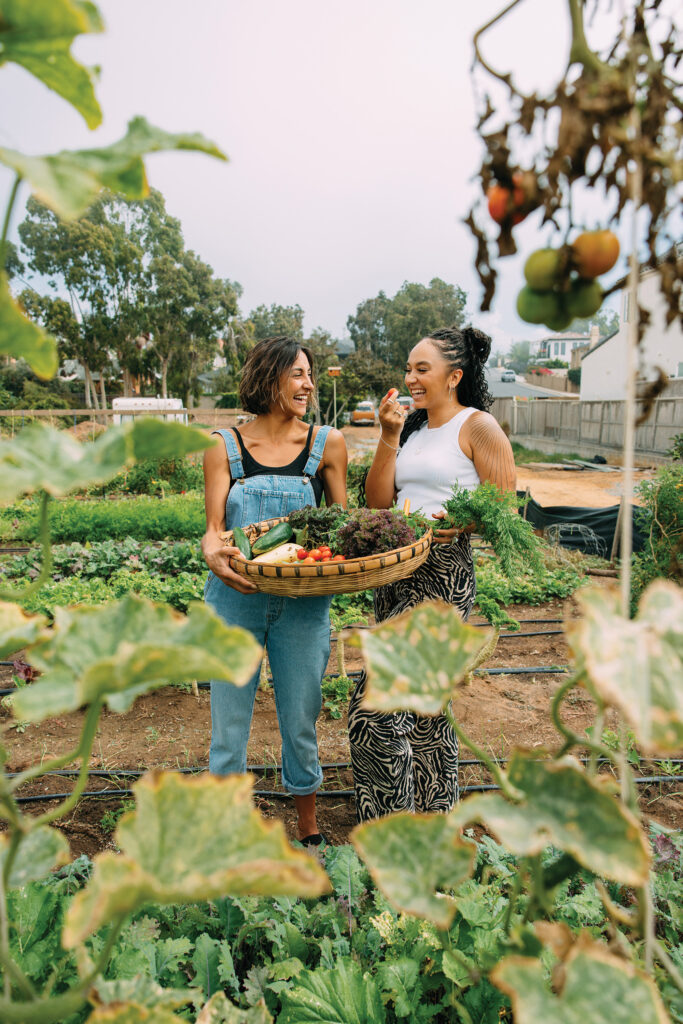
1. Mooi (LEFT) and friend with a farm fresh harvest.
2. Andean farmers in Ecuador.
TRJ Can you describe how more sustainable farming practices are connected to ideas in health, like food as medicine?
AM This is one of my favorite topics. I’m not a farmer but I grew up in the kitchen, so I continue to feel inspired when I see the parallels between nutrient density and flavor in food. I grew up eating seasonally, and I feel it’s the tastiest. When we eat seasonally and locally, not only are we eating the most flavorful ingredients available, but we’re also eating the most nutritionally dense foods, at least when the ingredients are grown in healthy soil by farmers using regenerative practices.
When food ingredients are transported from one place to the other, they lose nutrients as well as flavor. And then there’s the carbon footprint when ingredients are transported great distances before they reach our local grocery store shelves. When we eat seasonally and locally, we get to engage in a more reciprocal relationship with our immediate community, too. We get to support the farms growing the food closest to us — we benefit from the peak-season produce and get to experience the freshness, flavors, and nutritional density of locally grown ingredients.
TRJ Is seasonal farming a tenet of regenerative agriculture?
AM When we talk about regenerative farming and embracing nature’s processes, we’re enhancing biodiversity, as opposed to monocrops, which are a staple of the industrial farming complex. There’s no biodiversity or seasonality with industrial farming and monocrop food systems, because if you’re always growing corn or soy, it eventually depletes the soil. Farming regeneratively, you’re planting diverse crops and rotating seasonally — not only do you enhance the quality of the soil; you’re also rotating your soil, so it keeps getting better, and you’re inherently building more diversity that is changing, and increasing, with each season.
TRJ You mentioned growing up in the kitchen. How has your personal experience influenced your connection to regenerative farming?
AM My Mexican culture has been a huge part of my journey. I think, How do we align with what’s in front of us and create something from that? For me, that’s appreciating how I grew up. Maybe there were limited ingredients, but I was raised on a very seasonal diet that was very healthy, and we got to share it in the community.
It really took me going to the U.S. and seeing how disconnected most people were from these traditions around food and ways of accessing food — this was the turning point for me. The United States is a country of such diversity in terms of heritage, but the way that American society urges people to be more homogenous and adapt to fast foods is contributing to the level of disconnection between human beings, farming, and food. Growing up in Mexico instilled an appreciation in me around just how important it is to have direct and meaningful relationships with the people that we’re getting our food from. Healing that [relationship] can be on all of the levels — physical but also spiritual. When we know that we are part of something bigger, we realize how our sustenance is so tied to the community that we’re part of.