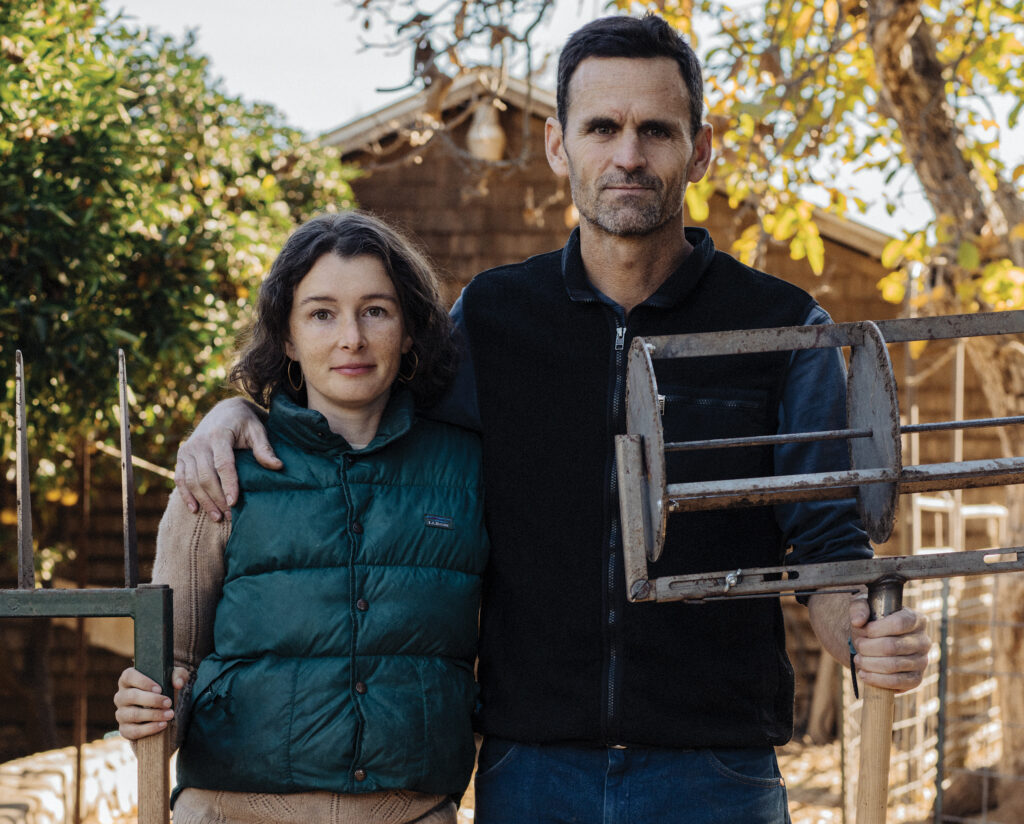
Hovik Azadkhanian, a third-generation coffee roaster, had been running his family’s coffee roasting enterprise for nearly a decade when the COVID-19 pandemic hit. By 2021, like many small companies, their business had almost completely dried up. But rather than hang onto a disappearing dream, Azadkhanian felt like it was the perfect time to listen to his conscience.
Because when is it not a good time to try to change the world?

“We were supplying about a thousand cafes and restaurants in the greater Northern California area, and overnight, that went to barely 20,” Azadkhanian tells The Rooted Journal. “That was a huge hit for us, but luckily, we have this manufacturing space, so I said, ‘Okay, guys, we have this one opportunity in our lifetime to actually reorg the company and shift directions and be part of the solution instead of part of the problem.”
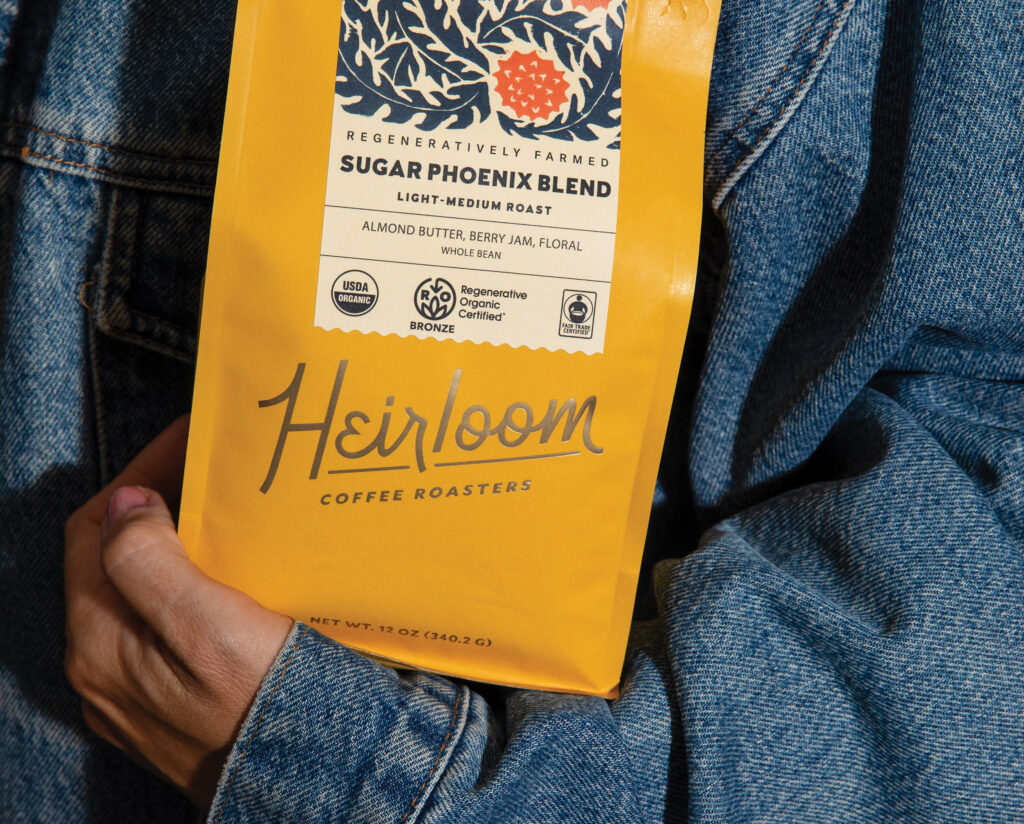
For Azadkhanian, that shift meant buying, roasting, and selling Regenerative Organic Certified (ROC) coffee. The ROC seal is given by the Regenerative Organic Alliance, a collective of farmers, business leaders, and experts in soil health, animal welfare, and social fairness, established in 2017. The certification validates that farms are practicing regenerative agriculture: no-till farming and zero artificial, external, or synthetic inputs into the soil, other than locally sourced compost. ROC coffee also supports farmworkers on a deeper level than any other certification and contributes to carbon sequestration, reforestation, and the rebuilding of topsoil.
“Every single coffee brand on the shelf has a Free Trade sticker and something or other about sustainability. But what does that actually mean?” says Azadkhanian. “I started to look at the main issue, which is, by 2050, the world will likely not be able to grow specialty-grade premium coffees, and that was a really big concern for me and the future of this company and my family. I learned about regenerative agriculture, and I was like, ‘Oh my gosh! This one’s not a buzzword.’ This can actually save the future of coffee, and we are going to be the first 100% regenerative coffee brand in the United States.”
Azadkhanian and his team took a step back to recalibrate. They gutted and rebuilt their facility in Oakland, California, and launched Heirloom Coffee Roasters in November 2021, with a new system to produce really premium, specialty-grade coffee, and a new “culinary roasting style” — a method they invented that keeps the beans at certain roasting stages for different lengths of time than what’s typical of specialty coffee.
They took a sample of this coffee — which was 100% regeneratively farmed, 100% certified organic, and 100% certified Fair Trade — and submitted it to San Francisco’s Good Food Awards, where it competed against 1,700 coffees in a blind tasting and won. The success was more than enough validation for going all in on regeneratively farmed organic coffee.
In August 2022, the world’s first-ever crop of ROC coffee was shipped from Cooperativa Sacaclí in Nicaragua to the Port of Oakland. Heirloom, along with three other U.S. brands — Groundwork Coffee, Equator Coffees, and Canyon Coffee — bought the first beans off the ship.
“It’s been a crazy, three-year journey,” says Azadkhanian. “The speed at which this took off was insane, but it really has to do with the consumer’s desire to do better with their money to support truly fair, truly sustainable, transparent, ecosystem-building farming practices. And a product that just tastes incredible.”
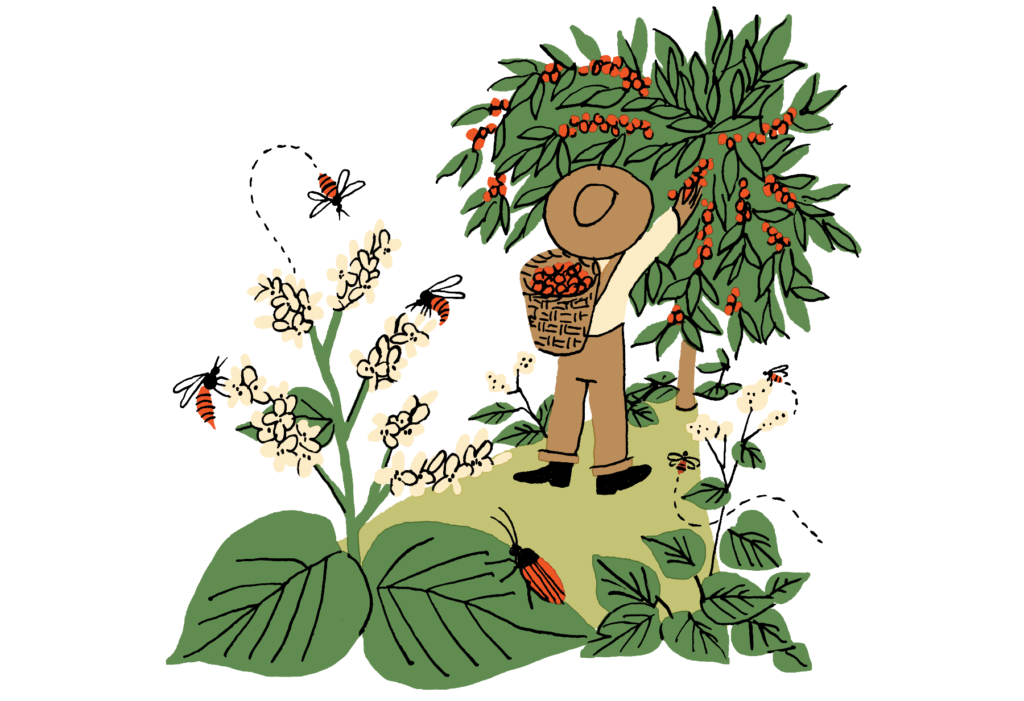
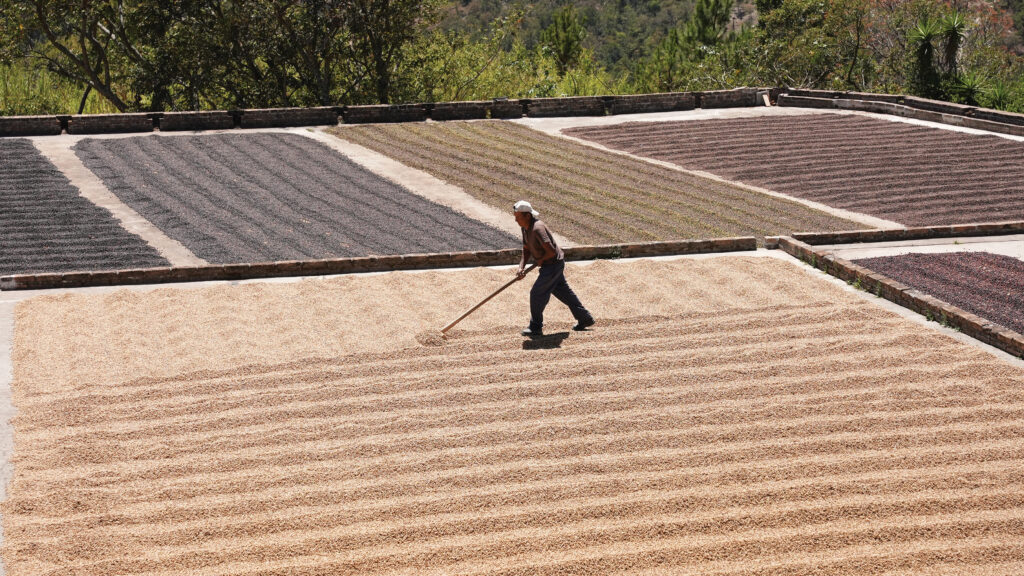
Regenerative coffee is just better for the land, reducing inputs and waste like chemical fertilizers that run downstream into the ocean.
The ROC Coffee Difference
One of the best ways to understand regenerative coffee farming is to understand what it’s not. Typically, farmers or co-ops growing specialty coffee will till the land, plant shrubs, then pour synthetic inputs, like nitrates or other types of fertilizer, onto the soil. They’ll get a great crop, but when it rains, all of that fertilizer gets washed into the creeks, rivers, and eventually, the ocean, where it can deplete sea life. Then the cycle starts anew. Every time those chemicals become part of the runoff from rain, a little bit of topsoil disappears. And topsoil is where all the life exists: the good nutrients, bacteria, fungus, and fungal networks.
“What I love about the regenerative model is that it says, ‘Okay, we need to find a solution here,’ because you can only take so much [topsoil] away until there’s nothing left,” says Azadkhanian. “That’s basic math, right?”
With regenerative farming, soil isn’t tilled. There are no synthetic or external inputs, and one of the most important elements is the use of cover crops, like small grasses, local shrubs, and native trees. Wind can be just as damaging to soil as rain, and the root network of cover crops keeps topsoil in place, creating the sponge-like layer that holds the water, nutrients, bacteria, and fungal networks. To receive Regenerative Organic Certification, coffee farmers must use only locally harvested compost — made from their own cow manure — or fertilizers with zero synthetics (even if they’re approved on the organic list of chemicals).
ROC coffee farming is just better for the land, too, something Azadkhanian saw on a recent trip to Central America. “When we were in Honduras, we visited one of my farmer co-op partners, the Pacayal Cooperative. They took us to a nonregenerative farm,” he says. “The soil was tilled, and it was very hard — you could knock on the ground. And then you would go to the regenerative farm, and the ground was really spongy, just full of life and smelled like living soil.
“They were so different and you could just tell, by looking at the two, that I want my coffee grown in the soil that’s clearly alive. It was really eye-opening for us to see that firsthand, because not only does it create an incredible product, but it changes communities.”
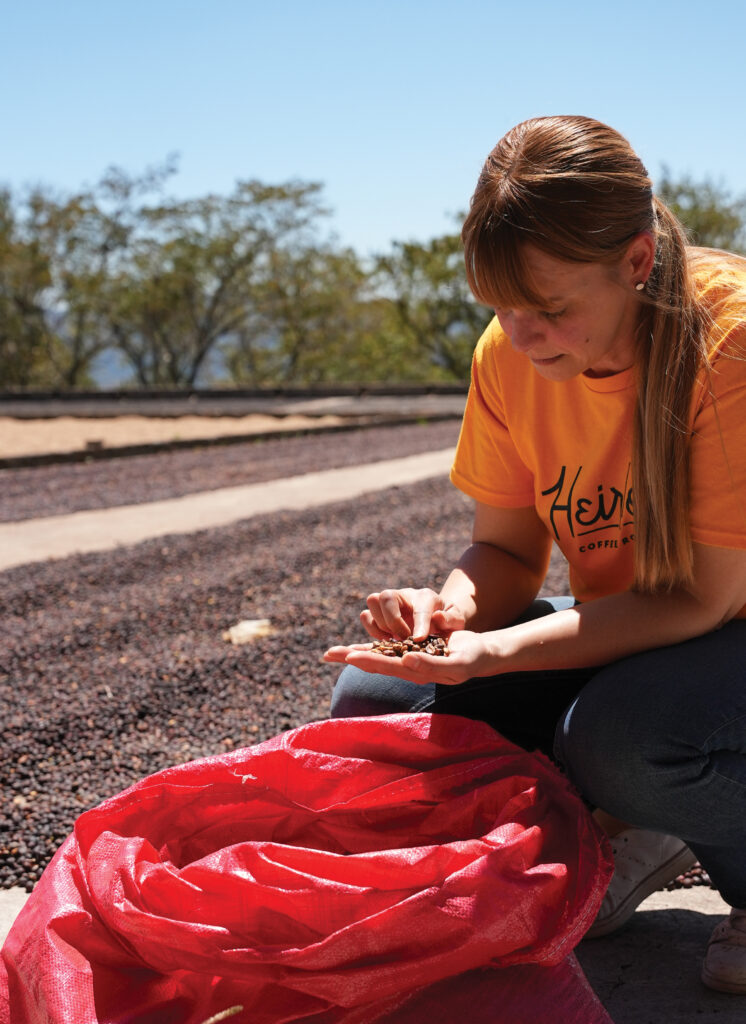
ROC coffee has far-reaching, transformative effects.
Questioning the Status Quo
“When I first read about the regenerative organic movement, it was like … you know when you’re looking for a new house or an apartment and you walk into ‘the one,’ and you just know that this is it?” says Jeff Chean, co-founder of L.A.-based Groundwork Coffee. “It was articulating exactly what we think is important.”
This regenerative method was a long time coming for folks like Chean, who knew empty buzzwords and the existing certifications weren’t enough. “Over the years, I began to notice that even certified organic farms were doing things that weren’t great,” he says. “For instance, folks at some of these farms were dumping the excess sugar into local waterways, which would encourage the growth of algae and, in turn, choke out the local fish. I realized that you can be both certified organic and still be a gross polluter.”
Regenerative organic methods provide a more holistic solution, with implications beyond the farm. “A term like ‘sustainability,’ it can be a slippery word. At its most basic, it means ‘the ability to sustain and keep the status quo.’ And often that status quo can sometimes be a bad situation or system. But with the concept of ‘regenerative,’ you’re actually trying to restore the land and a system,” Chean says. “The whole concept about regenerative organic for us is that we’re not poisoning ourselves, our kids, and our communities through our methods of making food. And we’re not destroying the soil through monocrops but, rather, making the soil healthier and restoring carbon into it.”
“As consumers in the U.S., because we’re so far away from the coffee growers, we can forget that lives are impacted by the choices we make at the grocery stores,” says Azadkhanian. “We forget that because something’s on sale or something has prettier packaging or something has a really interesting story behind it … but there’s no way to tell if the story is even true.”
Climate change disproportionately affects the tropical and subtropical regions where coffee is grown, and the consequences are dire:
- 50% of global land area suitable for coffee production may be lost by 2050 due to climate change.
- 60% of coffee species are considered at high risk of extinction.
- 25 million smallholder coffee growers are at risk of losing their primary source of income because of declining crop yields.
Regenerative organic farming is a viable solution, and the ROC label is an all-encompassing certification that promotes holistic agriculture based on three pillars:
ROC facilitates the adoption of agricultural practices that build, rather than degrade, soil by increasing soil organic matter, biodiversity, and fertility, including the use of cover crops, crop rotation, and conservation tillage.
ROC seeks to ensure humane practices in the raising and handling of animals (though this doesn’t typically apply to coffee farms).
ROC ensures fair payments and living wages for farmers and farmworkers, safe working conditions, capacity building, and freedom of association. “Our farmer-partners aren’t just suppliers; they’re stewards of the land, upholding agricultural practices that restore ecosystems, enrich soil health, and enhance biodiversity,” says Azadkhanian. “The work they do directly impacts the local population and provides upward mobility and economic opportunity for the entire community.”
Seeing Regeneration in Person
In 2018, after the second major migrant caravan left Central America for the United States, Marcala in the La Paz region of Honduras had become a ghost town. Many men had left, most stores and businesses were empty, but siblings Edgar and Karen Carillo decided to stay, buy a little land, and start a regenerative coffee farm.
Their endeavor would become the Pacayal Cooperative, the first ROC coffee farm in Honduras and a project that revitalized the entire community. Now, 450 families are part of this co-op, which provides regenerative farming training and resources. Pacayal has a research and development farm where different growing, planting, and horticulture techniques are tested, and youth are taught to practice regenerative farming.
“We got there, and the cities were alive,” recalls Azadkhanian about his 2024 visit. “All the stores were full. You saw schoolchildren everywhere. The roads were paved, and I told Edgar, ‘I’ve been reading about this area. I thought it was so dangerous.’ And he goes, ‘Yeah, 10 years ago it was like that, but since we started regenerative farming, we created this entire economy around coffee.’ It was an incredible sight to see.”
Chean agrees that ROC coffee has far-reaching, transformative effects. “This turn to regenerative organic farmed coffee is not a marketing play for us,” he says. “This is a life play, a commitment to try to reverse the damage that we’ve done, and make the world a better place for future generations.”